history

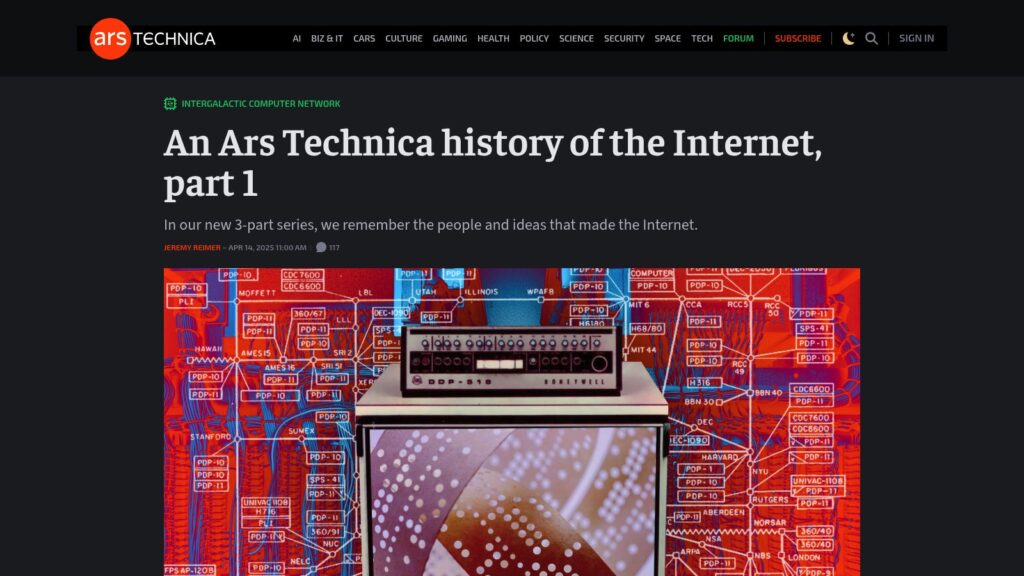
An Ars Technica History of the Internet, Part 1
Extreme TLDR:
Internet’s inception began in 1966 due to Robert Taylor’s frustrations with multiple terminals at ARPA. Sparked by J.C.R. Licklider’s early vision of an “Intergalactic Computer Network,” Taylor proposed ARPANET to connect computers, eliminating inefficiencies. Key innovations included packet switching and the Interface Message Processors (IMPs) developed by Bolt Beranek and Newman. The ARPANET evolved, later adopting TCP/IP protocols, fostering the Internet’s growth, while facing competition from other networks and standards. By the late 1970s, technical debates shaped its development, leading to TCP/IP dominance and the eventual decommissioning of ARPANET by the late 1980s.

https://arstechnica.com/gadgets/2025/04/a-history-of-the-internet-part-1-an-arpa-dream-takes-form/

An Ars Technica History of the Internet, Part 1 Read More »
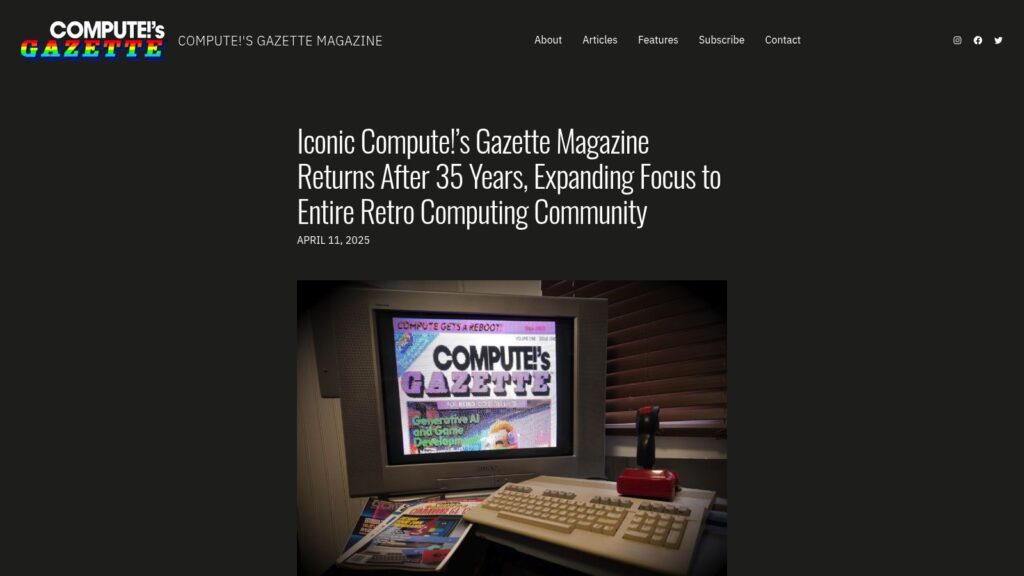
Iconic Compute!’s Gazette Magazine Returns After 35 Years, Expanding Focus to Entire Retro Computing Community

Compute!’s Gazette, a foundational magazine for Commodore 64 enthusiasts, returns after 35 years under COMPUTE! Publications, debuting in July 2025. Founded by Edwin Nagle, it will expand its focus to the broader retro computing community. Nagle, inspired by childhood memories and a desire to connect retro enthusiasts, aims to offer both digital and print editions monthly, emphasizing tangible experiences. Pre-orders for the first issue are now available at computesgazette.com.

https://www.computesgazette.com/iconic-computes-gazette-magazine-returns-after-35-years-expanding-focus-to-entire-retro-computing-community/

Iconic Compute!’s Gazette Magazine Returns After 35 Years, Expanding Focus to Entire Retro Computing Community Read More »

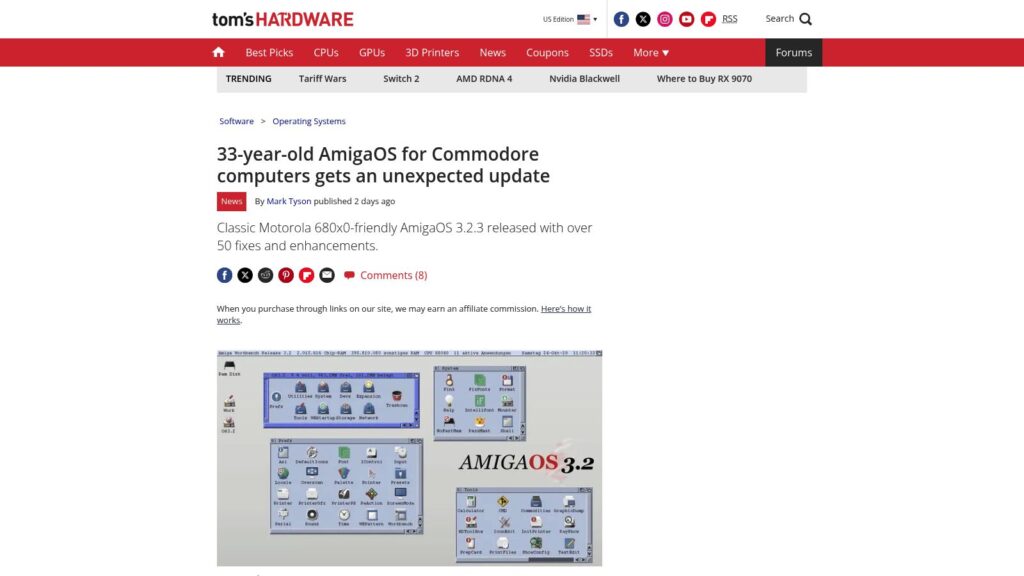
33-year-old AmigaOS for Commodore Computers Gets an Unexpected Update

AmigaOS 3.2.3, an update for the classic operating system for Commodore computers, has been released by Hyperion Entertainment, featuring over 50 fixes and enhancements. This update continues the legacy of AmigaOS, originally launched in 1992, and improves features like the ReAction GUI toolkit and TextEditor. Users can obtain the update for free if they own AmigaOS 3.2, with it also supporting retro hardware.

https://www.tomshardware.com/software/operating-systems/33-year-old-amigaos-for-commodore-computers-gets-an-unexpected-update

33-year-old AmigaOS for Commodore Computers Gets an Unexpected Update Read More »

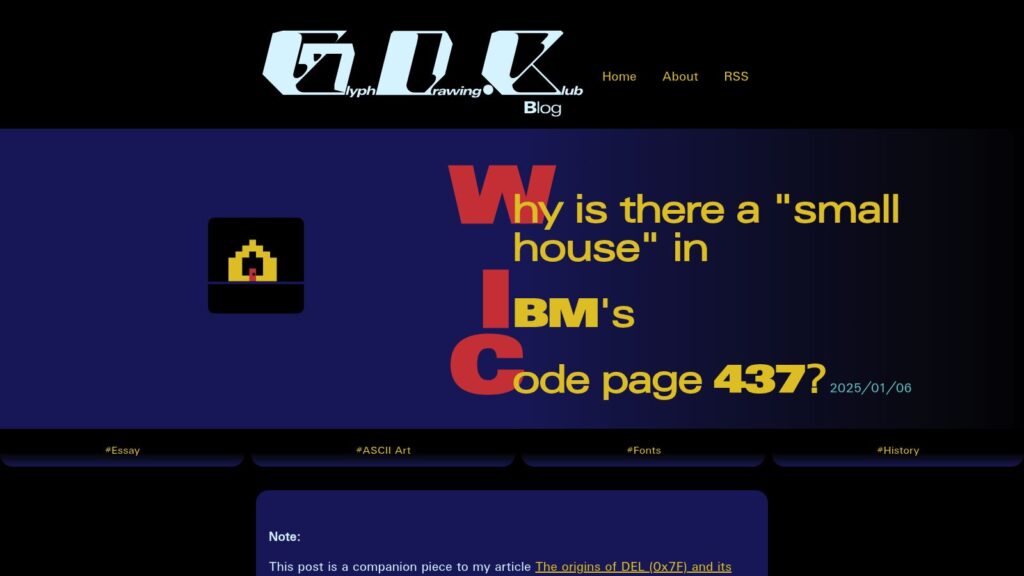
Why Is There a “small House” in IBM’s Code Page 437?

IBM’s Code Page 437 features a “small house” glyph (⌂) at code position 0x7F, where a DELETE (DEL) character logically belongs. This article explores how IBM’s choice of a house over more standard symbols may reflect the character set’s whimsical origin during the PC’s development. In contrast to prior systems like EBCDIC, CP437’s extended characters are a mix of international symbols and playful displays meant for text-based games. The origins of the house glyph remain ambiguous, with several theories suggesting it could symbolize home computing, relate to backspace, derive from other character sets, or come from an unrelated iconographic source. Despite inconsistencies in early documentation labeling it as either “house” or “delta,” the glyph’s legacy and use in ASCII art has since transcended its intended meaning, allowing users to impart their interpretations.

https://blog.glyphdrawing.club/why-is-there-a-small-house-in-ibm-s-code-page-437/

Why Is There a “small House” in IBM’s Code Page 437? Read More »

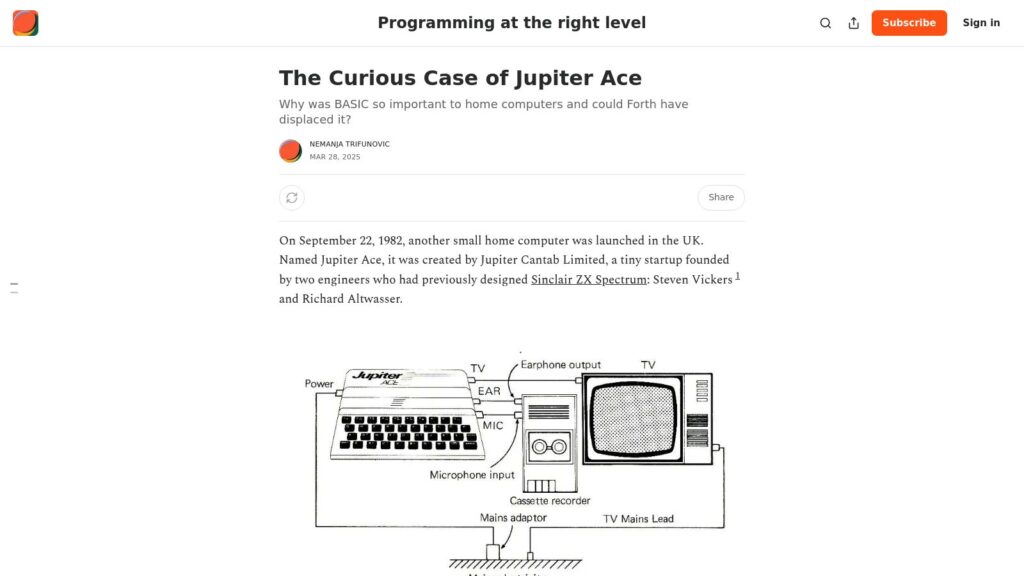
The Curious Case of Jupiter Ace

Jupiter Ace, launched in 1982 by Jupiter Cantab Limited, used Forth instead of BASIC, which contributed to its failure despite Forth being technically superior for serious software development. BASIC was popular due to its interactivity and familiarity, making it essential for home computers. The Ace was outdated with only 3KB of RAM and basic graphics, while competitors like the ZX Spectrum offered more memory and color. Forth’s implementation made the Ace unique, but it mainly appealed to Forth enthusiasts. Ultimately, basic user needs were for simple program loading, leading to the Ace’s commercial failure.

https://nemanjatrifunovic.substack.com/p/the-curious-case-of-jupiter-ace

The Curious Case of Jupiter Ace Read More »

Decoding the 90s: a Journey Into Reverse Engineering and Cryptography in Early Software Development

TLDR: The blog post chronicles reverse engineering the QText word processor from the 1990s, focused on recovering locked documents by analyzing their encryption and passcode derivation. It details the process of dissecting the MS-DOS executable, understanding the encryption behavior, and eventually deriving the passcode through a custom Python script, emphasizing the challenges and methods used in early software cryptography.

https://www.botanica.software/post/decoding-the-90s

Decoding the 90s: a Journey Into Reverse Engineering and Cryptography in Early Software Development Read More »

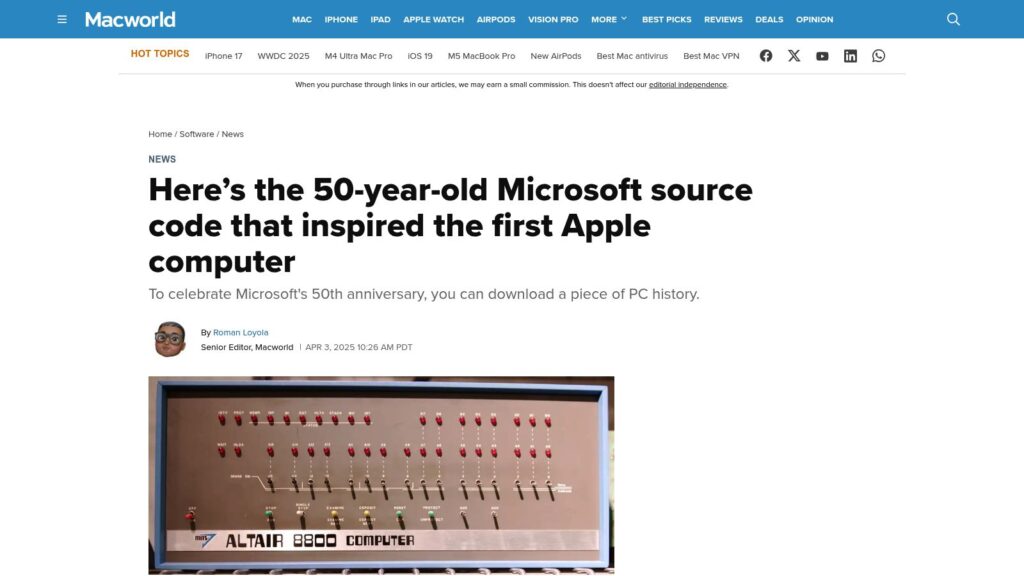
Here’s the 50-year-old Microsoft Source Code That Inspired the First Apple Computer

Microsoft’s 50th anniversary features a downloadable source code for Altair BASIC, its first product, inspired by the Altair 8800 computer. Bill Gates and Paul Allen created this programming language to broaden personal computing access. Steve Wozniak later adapted this BASIC version for the Apple I, leading to the Apple II’s success. The 157-page Altair BASIC source code is now available as a PDF.

https://www.macworld.com/article/2657449/heres-the-50-year-old-microsoft-source-code-that-inspired-the-first-apple-computer.html

Here’s the 50-year-old Microsoft Source Code That Inspired the First Apple Computer Read More »

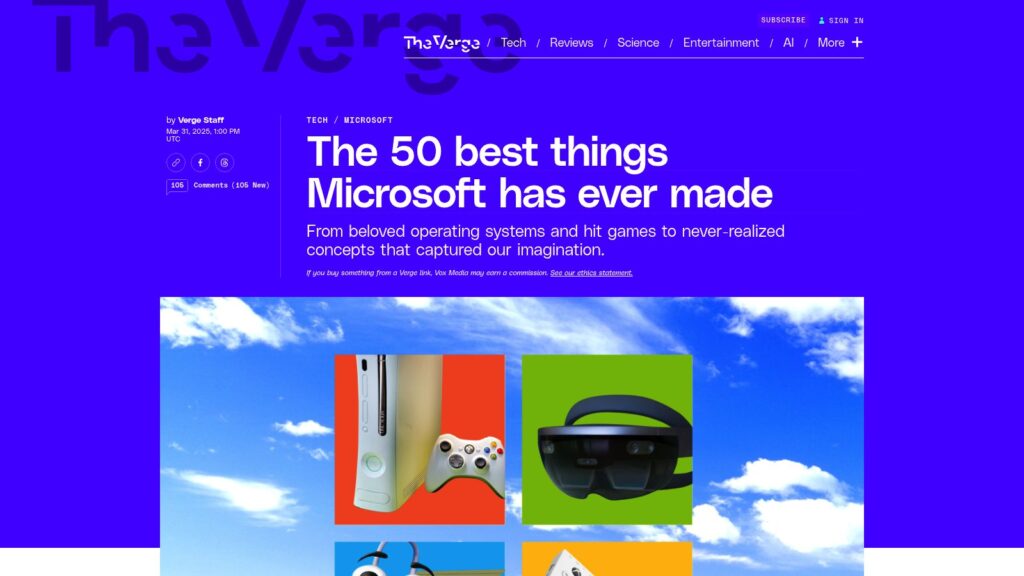
The 50 Best Things Microsoft Has Ever Made

Microsoft, celebrating its 50th anniversary, has produced numerous notable products, including gaming systems, operating systems, and innovative design concepts. The Verge compiled a list of 50 best offerings, highlighting historical significance and consumer impact. The list features memorable products, both successful and less so, reflecting on the company’s evolution from two founders in New Mexico to a global tech giant. Noteworthy mentions include Clippy, Zune, Windows 10, and the Xbox Adaptive Controller, showcasing creativity, design, and cultural influence over decades.

https://www.theverge.com/microsoft/636951/microsoft-50-best-products-anniversary

The 50 Best Things Microsoft Has Ever Made Read More »

Scroll to Top