computer

The Zilog Z80 Has Turned 50

The Zilog Z80 microprocessor, launched in July 1976, achieved significant success in early 8-bit personal computers and numerous embedded applications, remaining in use in industrial systems until its discontinuation in 2024. Developed as a binary compatible, enhanced successor to the Intel 8080, the Z80 introduced added registers, new instructions, simplified bus design, and flexible interrupt modes, enabling simpler system interfacing and higher performance. Its design lineage traces back to the Datapoint 2200 terminal’s TTL-based CPU and Intel’s 8008 and 8080 processors, with the Z80 influencing later architectures and maintaining relevance for nearly five decades.

https://goliath32.com/blog/z80.html

The Zilog Z80 Has Turned 50 Read More »

Jurassic Park Computers in Excruciating Detail

The article provides an in-depth analysis of the computers and software featured in the original Jurassic Park film, highlighting authentic hardware such as the Apple Powerbook 100, SGI R4000 Indigo, SGI IRIS Crimson, Thinking Machines CM-5 supercomputers, and peripherals like the Motorola Envoy PDA and PLI Mini Arrays. It details how real systems and software, including the IRIX operating system and the fsn file explorer, were used or simulated onscreen to create a convincing depiction of the park’s control room, with notable product placements and historically accurate technical details verified by production accounts and period documentation.

https://fabiensanglard.net/jurrasic_park_computers/index.html

Jurassic Park Computers in Excruciating Detail Read More »

Tiny Emulators

Tiny Emulators is a collection of web-based emulators for classic 8-bit computers and arcade systems, including the Commodore 64, ZX Spectrum, Amstrad CPC, KC85 series, and more. Hosted on GitHub, these emulators support running original software, demos, and games from the retro computing era, providing accessible preservation and interactive experiences through modern browsers. The project features various user interfaces and modules to replicate hardware behavior, enabling enthusiasts to explore vintage systems and software digitally.

https://floooh.github.io/tiny8bit-preview/index.html

Tiny Emulators Read More »

Starring the Computer

Starring the Computer is a comprehensive online database documenting computers featured in movies and television shows, cataloged alphabetically by brand and model. The site provides detailed listings of various historic and modern computers like Acorn, Apple, Amstrad, and Acer, along with the specific films and TV episodes where each computer appeared. It serves as a resource for enthusiasts interested in the portrayal and use of vintage and contemporary computing devices in popular media.

https://www.starringthecomputer.com/computers.html

Starring the Computer Read More »

The Last People Who Know How It Works

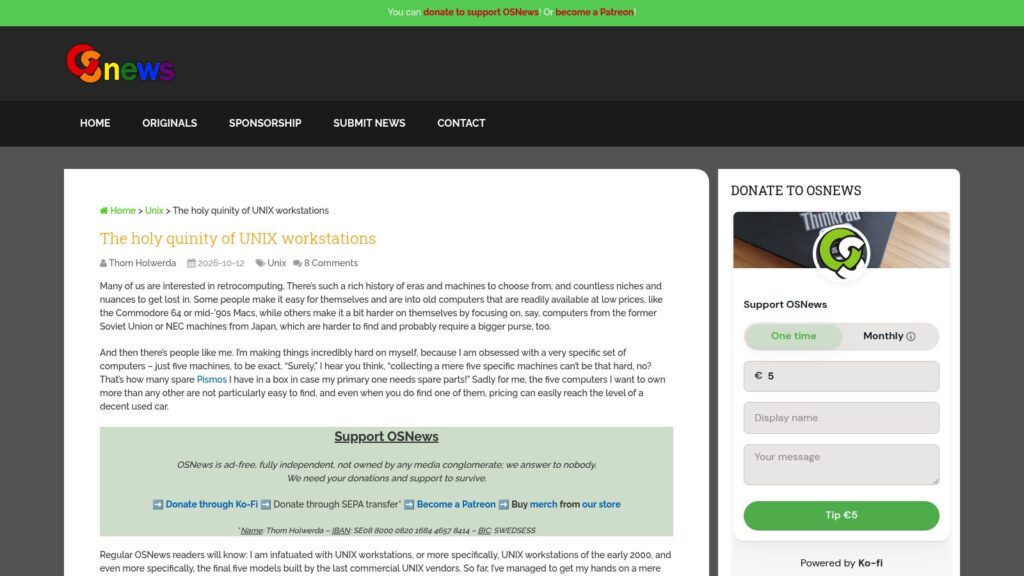
In the 1990s, engaging with computers required deep, hands-on knowledge of their workings, from editing configuration files to troubleshooting hardware conflicts, fostering an intimate understanding through challenge and effort. Today’s AI-driven machines, by contrast, remove these barriers by anticipating and accommodating user needs without requiring technical struggle, resulting in people becoming more dependent yet less familiar with the underlying systems. This shift marks the end of an era where intimate acquaintance with technology arose from overcoming its difficulties, highlighting a cultural loss experienced by older generations but unnoticed by younger users accustomed to seamless, frictionless tools.

https://unix.foo/posts/last-people-who-know-how-it-works/

The Last People Who Know How It Works Read More »

It’s Only When You Look Back

Mark Dastmalchi-Round reflects on 40 years of computing, tracing his journey from coding on a Sinclair ZX Spectrum to managing modern cloud-native projects. He chronicles key personal and technological milestones—including early BBS experiences, working with Amiga and Unix-like systems, navigating the rise of the internet and open source, and evolving web development practices—while preserving an extensive archive of his online presence spanning 25 years. His account highlights the rapid evolution of hardware, software, and online communities, capturing a vivid panorama of computing history through a personal lens.

https://www.markround.com/blog/2026/06/17/25-its-only-when-you-look-back/

It’s Only When You Look Back Read More »

The Eerie Interface of Man and Machine (Life Magazine, October 1967)

In October 1967, Life Magazine published an article exploring how computers functioned and speculated on the possibility of creating learning machines modeled after the human brain’s complex neural network. It highlighted the brain’s interconnected neurons and feedback loops, contrasting them with the more linear pathways in computers, and noted the immense technical and conceptual challenges in replicating human-like learning in machines. Despite early optimism, the article conveyed skepticism about programming such machines to reason or learn autonomously, emphasizing the vast unknowns in brain function and computer programming of the era.

https://blog.jgc.org/2026/06/the-eerie-interface-of-man-and-machine.html

The Eerie Interface of Man and Machine (Life Magazine, October 1967) Read More »

8086 Segmented Memory Was a Good Idea. (Almost.)

The 8086’s segmented memory architecture was an innovative solution to extend addressing beyond 64KB using familiar 16-bit registers combined with segment registers, enabling backward compatibility with 8080 code. However, developers preferred treating memory as a flat continuous space rather than true segments, which led to widespread use of normalized pointers and ultimately limited the architecture’s scalability. Intel’s original vision of opaque segment selectors could have sustained the design longer, but the practical demands and shortcuts taken by software broke this ideal, influencing the evolution of x86 memory management.

https://owl.billpg.com/8086-segmented-memory-was-a-good-idea-almost/

8086 Segmented Memory Was a Good Idea. (Almost.) Read More »

A Brief Tour of the PDP-11, the Most Influential Minicomputer of All Time

The PDP-11 minicomputer, introduced in 1970 by Digital Equipment Corporation, significantly impacted computing by popularizing interactive computing and influencing modern hardware architecture, operating systems, and programming languages. It notably contributed to the development of the UNIX operating system and the C programming language, with its elegant 16-bit architecture and assembly programming features fostering flexibility and efficiency in software development. The PDP-11’s widespread use in various critical systems and its long commercial life underscore its profound legacy in computing history.

https://arstechnica.com/gadgets/2022/03/a-brief-tour-of-the-pdp-11-the-most-influential-minicomputer-of-all-time/

A Brief Tour of the PDP-11, the Most Influential Minicomputer of All Time Read More »

Soldering My Way to 1MB

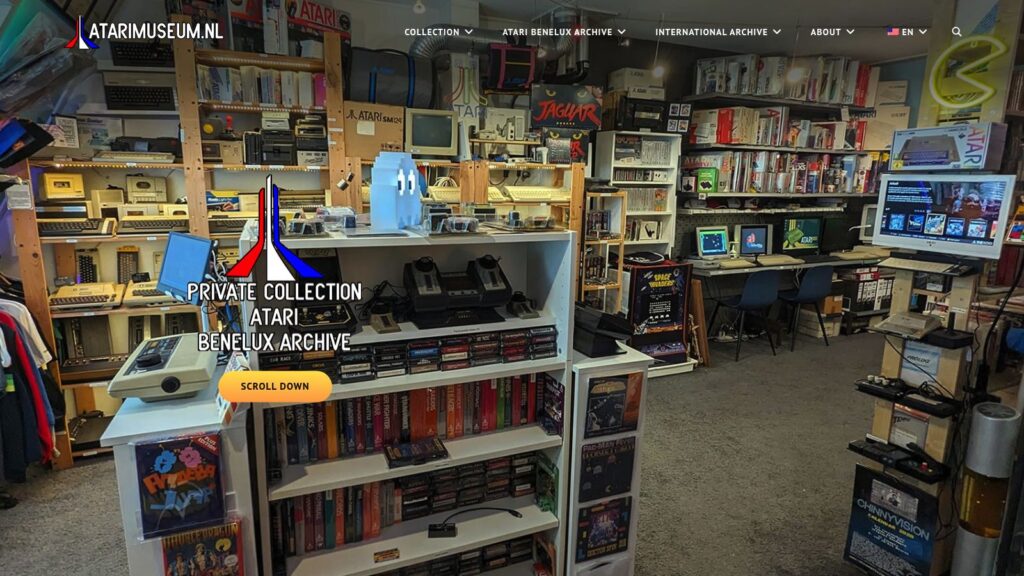
The Atari ST, launched in the mid-1980s under Jack Tramiel’s leadership, offered affordable and powerful computing with a Motorola 68000 CPU, a graphical desktop, and notably built-in MIDI ports that attracted musicians and developers alike. The author recalls personally upgrading their 520ST by soldering extra RAM chips onto the motherboard, doubling its memory and extending its lifespan, highlighting the machine’s hands-on, user-friendly nature. Although it never achieved widespread success in the U.S., the Atari ST remains a significant and nostalgic computer for its era, especially in music production.

https://www.macsparky.com/blog/2026/06/soldering-my-way-to-1mb/

Soldering My Way to 1MB Read More »

Scroll to Top