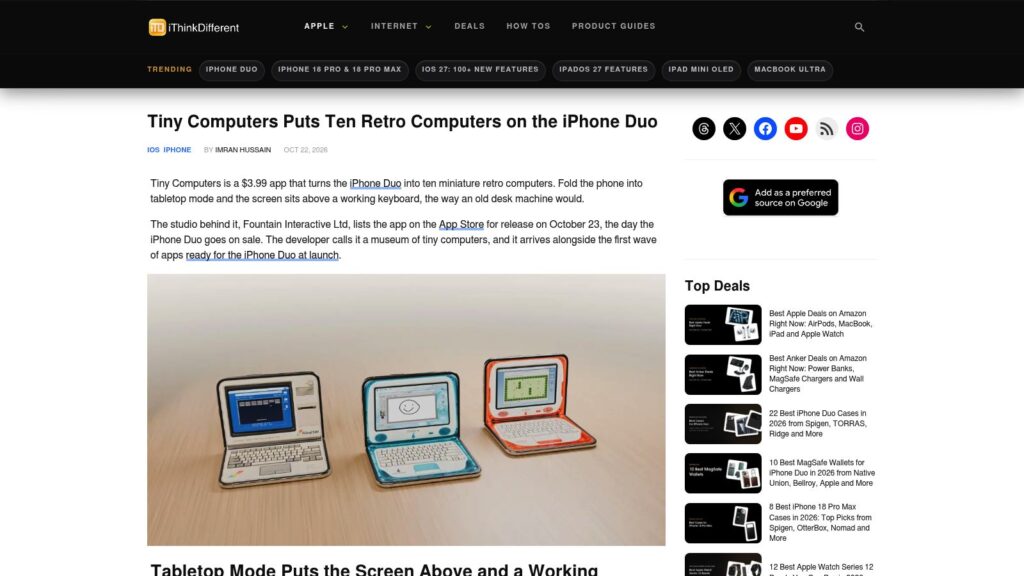
Ahoy, DECmate II! the Little PDP-8 That Could

The article explores the history and significance of the DECmate II, a 1982 desktop microcomputer by Digital Equipment Corporation that condensed the PDP-8 minicomputer architecture into a word-processing machine aimed at office use. It traces the PDP-8’s evolution from the 1960s, highlights the challenges DEC faced with microcomputers, and details the role of the CMOS microprocessor implementations like the Intersil IM6100 and Harris HD-6120 in enabling the DECmate line. The DECmate II featured improvements over earlier models with a more modern design and pricing strategy, making it an accessible office system that maintained much of the PDP-8’s legacy despite compatibility quirks.

https://oldvcr.blogspot.com/2026/05/ahoy-decmate-ii-little-pdp-8-that-could.html

Ahoy, DECmate II! the Little PDP-8 That Could Read More »

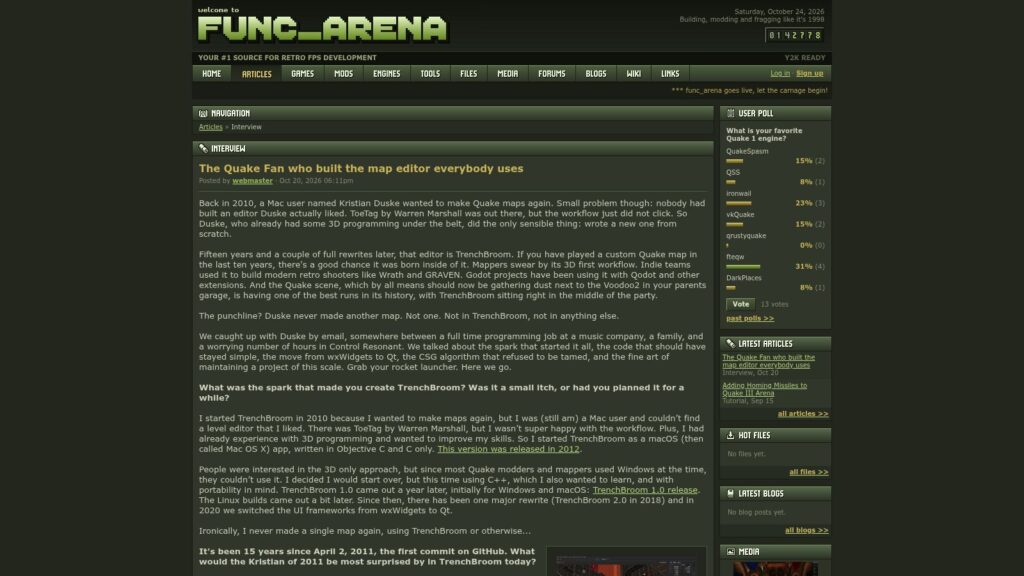
How the ZX80 Works

The Sinclair ZX80, launched in 1980 as a low-cost home computer, operates primarily by drawing the TV screen using clever hardware and running mostly NOP instructions rather than focusing on code execution. It achieves video output without a dedicated video chip by using the Z80 CPU, minimal RAM and ROM, and TTL logic chips to multiplex the address and data buses, intercepting reads in the high address mirror area to generate video signals through character ROM lookups and timing the CPU clock precisely to match TV scan lines, enabling the screen to be refreshed 50 times per second while handling input and memory access with minimal hardware complexity.

http://blog.tynemouthsoftware.co.uk/2019/10/how-the-zx80-works.html

How the ZX80 Works Read More »

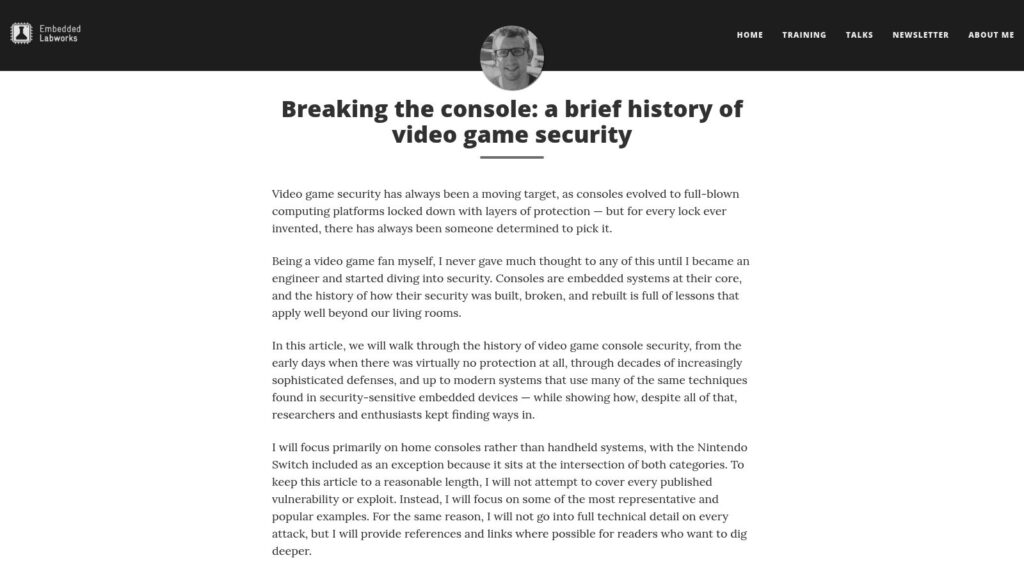
How a Cambridge Project Rescues Fading Floppy Disk Data

Leontien Talboom of Cambridge University Libraries led the “Future Nostalgia” project to preserve data on aging floppy disks, which are degrading physically and losing the tacit knowledge needed to access their contents. By collaborating with the retro computing community and developing specialized techniques to read various formats, the project aims to transfer and maintain floppy disk data sustainably before it is lost.

https://spectrum.ieee.org/floppy-disk-data-preservation-archives

How a Cambridge Project Rescues Fading Floppy Disk Data Read More »

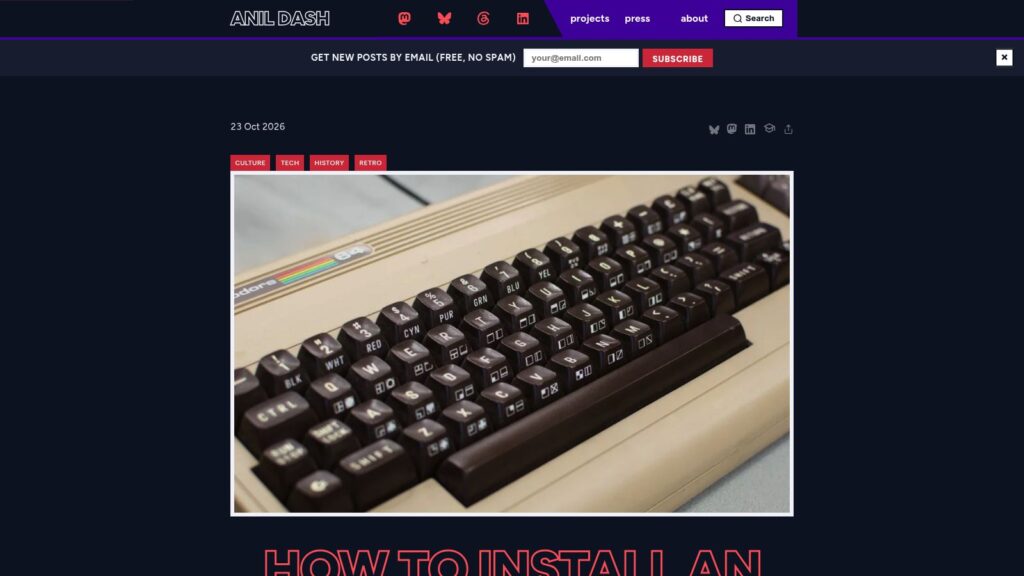
Museum of Pocket Calculating Devices

The Museum of Pocket Calculating Devices showcases a diverse collection of calculators and related tools, including slide rules, addiators, and abacuses from various brands such as Casio, Hewlett Packard, Texas Instruments, and Sharp. The museum highlights the history, technology, and evolution of pocket calculators and scientific computing devices, featuring vintage models with LED, LCD, and solar functionalities, reflecting their significance in scientific and everyday calculations.

https://www.calculators.de/

Museum of Pocket Calculating Devices Read More »

Andrew Warkentin

The Virtual OS Museum is a comprehensive collection of over 1,700 pre-installed and pre-configured operating systems and standalone applications running on emulators within a Linux VM compatible with QEMU, VirtualBox, or UTM. Spanning from the earliest stored-program computers of 1948 to modern OSes, it offers an accessible way to explore historical operating systems without complex setup, featuring a custom launcher with snapshot capabilities and covering a vast range of platforms from mainframes and Unix variants to personal computer and mobile OSes.

https://virtualosmuseum.org/

Andrew Warkentin Read More »

Retrotechnology Media

Retrotechnology Media, hosted by Typewritten Software, presents a comprehensive museum of historical computer software and operating environments through a vast collection of screenshots and exhibits spanning from 1983 to 2007. The site documents the visual evolution of various desktop systems and the curator’s primary desktop setups over time, serving as a resource for preservation and study of vintage computing interfaces and software history. It includes systems like VisiCorp Visi On, SunTools, HP Integral PC, and IBM 4-Color CGA Graphics. The screenshots showcase the evolution of graphical user interfaces and desktop environments during this period.

http://www.typewritten.org/Media/

Retrotechnology Media Read More »

35 Years Ago, the Mac Got an Era-Defining Upgrade

Released in May 1991, Apple’s System 7 marked a pivotal upgrade for the Mac by introducing true multitasking, virtual memory, a modern Trash Can, and key features like Force Quit, file aliases, and Apple Events that are still foundational in macOS today. This transformative update significantly boosted productivity and extended the life of the classic Mac OS, ultimately bridging the gap to the later development of Mac OS X following the struggles of ambitious but failed projects in the 1990s.

https://www.macworld.com/article/3136937

35 Years Ago, the Mac Got an Era-Defining Upgrade Read More »

Using a 1978 Terminal in 2026 (DEC VT-100)

The author explores using a 1978 Digital Equipment Corporation VT-100 terminal as a main terminal in 2026, finding that while the VT-100 remains compatible with modern terminal protocols like ANSI escape sequences, practical challenges arise such as flow control issues, slow baud rates limiting screen redraw speed, and lack of support for Unicode and newer escape sequences. Despite these hurdles, with adjustments like ASCII-only mode and legacy settings, basic applications like vim and bash work, highlighting the enduring legacy and foundational role of the VT-100 in terminal technology.

https://nikhiljha.com/posts/vt100/

Using a 1978 Terminal in 2026 (DEC VT-100) Read More »

Email Could Have Been X.400 Times Better

The article explores how the X.400 email standard, developed in 1984, included many advanced email features such as message recall, scheduling, encryption, and multilingual support long before SMTP-based internet email adopted them. However, due to its complex, top-down design and difficult implementation, X.400 failed to achieve widespread interoperability and usability, allowing the simpler, more adaptable SMTP protocol to become the foundation of modern email despite lacking some of X.400’s richer features.

https://buttondown.com/blog/x400-vs-smtp-email

Email Could Have Been X.400 Times Better Read More »

Using the Internet Like It’s 1999

The article argues that the modern internet, dominated by social media algorithms and AI-generated content, has become a less authentic, attention-extracting environment, causing users to lose true engagement and agency. It advocates for returning to an internet usage style reminiscent of 1999, focusing on protocols like RSS, IRC, and email to regain control over content consumption, prioritize real human interaction, and reduce reliance on manipulative platforms. This approach aims to revive a more genuine and sovereign internet experience, countering the current trend of distraction and artificiality.

https://joshblais.com/blog/using-the-internet-like-its-1999/

Using the Internet Like It’s 1999 Read More »

Scroll to Top