history

The Rise and Fall of Apple’s Mac Clones Era

Apple briefly allowed Mac clones in the 1990s to respond to a competitive PC market but quickly withdrew due to concerns over brand integrity and sales. The clone era lasted from 1995 to 1997, enabling third parties, like Power Computing, to legally produce Macintosh-compatible computers. However, the effort ultimately failed as these clones undercut Apple’s market, leading to significant financial losses. Upon Steve Jobs’ return, Apple ended the clone program to regain control over its ecosystem, revealing the pitfalls of licensing its operating system to competitors.

https://spectrum.ieee.org/apple-mac-clones-history

The Rise and Fall of Apple’s Mac Clones Era Read More »

Reviving Classic Unix Games: a 20-Year Journey Through Software Archaeology

The article recounts a two-decade quest to preserve the 1987 Unix game Conquer. The author traced, contacted, and obtained permissions from the original creators and contributors to relicense the code under GPLv3. During this journey, the author modernized the codebase and leveraged contemporary build and packaging tools to make the game easily accessible on modern Linux distributions. The project highlights challenges in archiving software, the importance of clear licensing and documentation, and the community’s role in preservation. Now, both classic and updated versions are available with modern packaging, bridging the past and future for developers.

https://vejeta.com/reviving-classic-unix-games-a-20-year-journey-through-software-archaeology/

Reviving Classic Unix Games: a 20-Year Journey Through Software Archaeology Read More »

Explaining, at Some Length, Techmeme’s 20 Years of Consistency

Techmeme celebrates its 20th anniversary as a consistent news aggregator for the tech industry, linking key reports and social media perspectives. Despite challenges like paywalls and social media fragmentation, it remains a shared resource amidst evolving media landscapes. The site plans to enhance participation, customization, and expansion while recognizing that journalism continues to play a crucial role in tech news.

https://news.techmeme.com/250912/20-years

Explaining, at Some Length, Techmeme’s 20 Years of Consistency Read More »

52 Year Old Data Tape Could Contain Unix History • The Register

Tape containing the original Unix Fourth Edition, believed to be from the 1970s, discovered at the University of Utah. If recoverable, it may provide vital historical data, including the first Unix version written in C. The tape will be delivered to the Computer History Museum for analysis.

https://www.theregister.com/2025/11/07/unix_fourth_edition_tape_rediscovered/

52 Year Old Data Tape Could Contain Unix History • The Register Read More »

The Microsoft SoftCard for the Apple II: Getting Two Processors to Share the Same Memory

Microsoft’s Z-80 SoftCard allowed Apple II users to run CP/M software by utilizing a secondary Zilog Z80 processor, facilitating memory sharing and enabling coexistence with the existing 6502 processor. The SoftCard remapped memory to avoid conflicts and included a detailed manual for programming, including challenges of managing interrupts and memory addresses.

https://devblogs.microsoft.com/oldnewthing/20251104-00/?p=111758

The Microsoft SoftCard for the Apple II: Getting Two Processors to Share the Same Memory Read More »

Mr TIFF

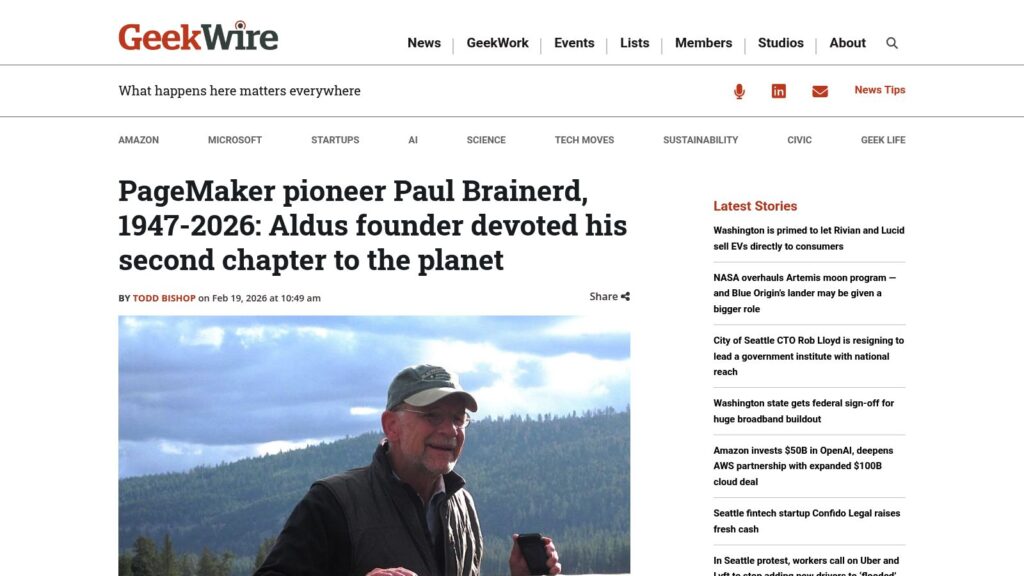
Author John Buck chronicles his quest to credit inventors behind technology, notably Stephen Carlsen, creator of TIFF. Despite initial anonymity, Buck’s persistence led him to Carlsen, who shaped the standard while at Aldus. Tragically, Carlsen passed away before full recognition could be achieved. Buck updated TIFF’s Wikipedia entry, giving Carlsen the acknowledgment he deserves: “created by Stephen Carlsen, an engineer at Aldus.”

https://inventingthefuture.ghost.io/mr-tiff/

Mr TIFF Read More »

Scroll to Top