software

Retrotechnology Media – Typewritten Software

The Retrotechnology Media site presents a comprehensive collection of screenshots showcasing a wide range of vintage operating environments and graphical user interfaces from 1983 to 2007. It documents the evolution of classic desktop systems, including SunTools, GEM, NeXTstep, BeOS, Mac OS versions, and others, serving as a visual archive for retro computing enthusiasts. The site also includes resources such as a software library, restoration projects, and historical articles dedicated to preserving and studying early computer technology.

https://typewritten.org/Media/

Retrotechnology Media – Typewritten Software Read More »

AmigaOS 2: The Greatest Upgrade

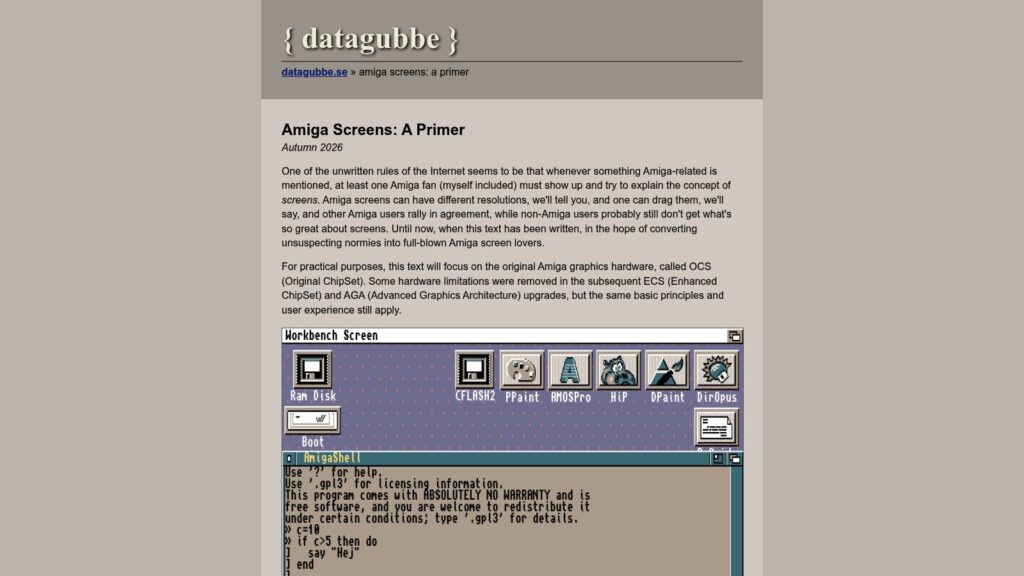
AmigaOS 2, released alongside the Amiga 3000 in the early 1990s, marked a major advancement over the original 1.x series by improving system stability, speed, and usability. It introduced a standardized GUI toolkit with a modern 3D look, enhanced file management features, modular preferences, and new developer frameworks such as BOOPSI and ARexx scripting, greatly expanding the platform’s functionality and ease of development. While some beloved features, such as the Guru Meditation error message and speech synthesis, were removed, AmigaOS 2 significantly modernized the user experience and prepared the Amiga line for the 32-bit computing era.

https://datagubbe.se/os20up/

AmigaOS 2: The Greatest Upgrade Read More »

Andrew Warkentin

The Virtual OS Museum is a comprehensive collection of over 1,700 pre-installed and pre-configured operating systems and standalone applications running on emulators within a Linux VM compatible with QEMU, VirtualBox, or UTM. Spanning from the earliest stored-program computers of 1948 to modern OSes, it offers an accessible way to explore historical operating systems without complex setup, featuring a custom launcher with snapshot capabilities and covering a vast range of platforms from mainframes and Unix variants to personal computer and mobile OSes.

https://virtualosmuseum.org/

Andrew Warkentin Read More »

Retrotechnology Media

Retrotechnology Media, hosted by Typewritten Software, presents a comprehensive museum of historical computer software and operating environments through a vast collection of screenshots and exhibits spanning from 1983 to 2007. The site documents the visual evolution of various desktop systems and the curator’s primary desktop setups over time, serving as a resource for preservation and study of vintage computing interfaces and software history. It includes systems like VisiCorp Visi On, SunTools, HP Integral PC, and IBM 4-Color CGA Graphics. The screenshots showcase the evolution of graphical user interfaces and desktop environments during this period.

http://www.typewritten.org/Media/

Retrotechnology Media Read More »

Original Apollo 11 Code Open-Sourced by NASA — Original Command Module and Lunar Module Code Repos Are Now Public Domain Resources

The article reports that NASA has made the original Apollo 11 guidance computer software publicly available, including separate codebases for the Command Module and Lunar Module. The release allows people to study and run the historic assembly-language programs that helped guide the first Moon landing under extremely limited computing resources. The main point is that opening this code preserves an important part of computing history and highlights the efficiency and engineering required for early space missions.

https://www.tomshardware.com/software/original-apollo-11-code-open-sourced-by-nasa-original-command-module-and-lunar-module-code-repos-are-now-public-domain-resources

Original Apollo 11 Code Open-Sourced by NASA — Original Command Module and Lunar Module Code Repos Are Now Public Domain Resources Read More »

How the Spreadsheet Reshaped America

The electronic spreadsheet, particularly Microsoft Excel, revolutionized American businesses by enabling managers to process information and make data-driven decisions at an unprecedented scale. Before spreadsheets, companies relied on labor-intensive methods like columnar pads to analyze data, limiting their ability to understand complex business dynamics. The advent of VisiCalc, the first electronic spreadsheet, transformed the Apple II into a powerful business tool, enabling instant calculations and complex formulas and ultimately reshaping American corporations.

https://davidoks.blog/p/how-the-spreadsheet-reshaped-america

How the Spreadsheet Reshaped America Read More »

LotusNotes

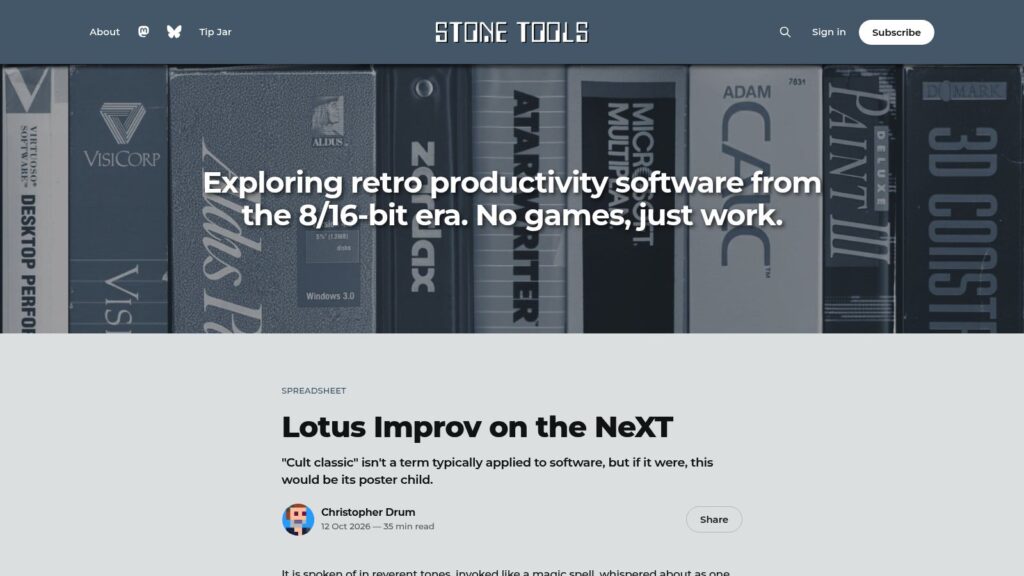
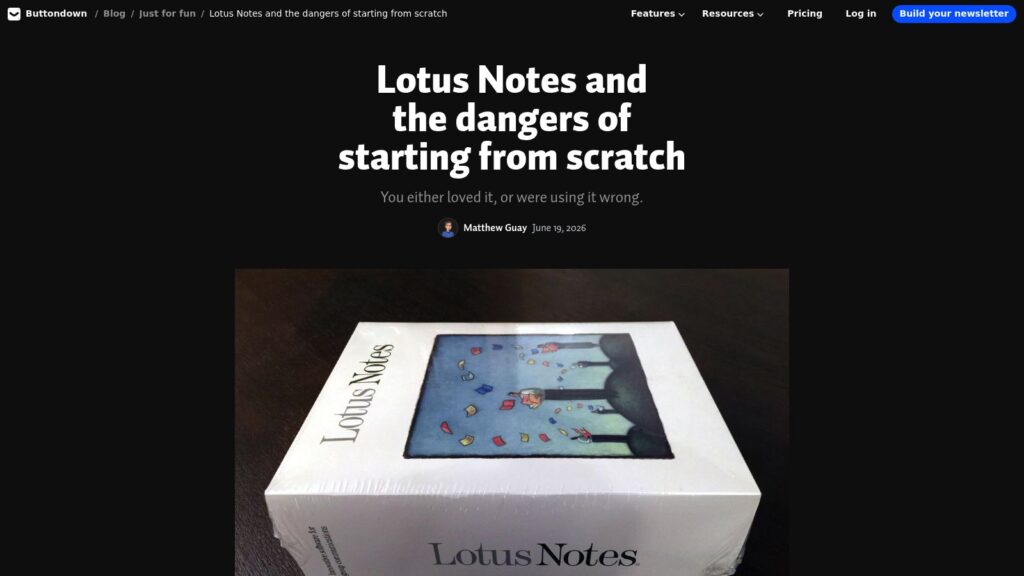
Lotus Notes originated from the University of Illinois’ PLATO system, a pioneering multi-user, networked computer system emphasizing public collaboration and user-generated content, funded by the military and the NSF. Developed in the 1980s by Ray Ozzie and Iris Associates under Lotus Development, Lotus Notes evolved as a flexible groupware platform blending email, calendaring, and database functions with replication technology inherited from PLATO’s architecture. Despite its initial dominance in enterprise groupware, Lotus Notes declined significantly after IBM’s acquisition, largely due to competition from Microsoft Exchange and shifting industry standards favoring open protocols and web integration.

https://computer.rip/2026-03-14-lotusnotes.html

LotusNotes Read More »

The Most Important Software Innovations

David A. Wheeler’s paper identifies the most important software innovations by focusing strictly on technological innovations that have had widespread and critical impact on programming, deliberately excluding hardware advances and non-technological developments such as legal or social inventions. The paper also argues that software patents have largely failed to promote innovation, often covering obvious ideas or prior art, and have instead impeded software development, with most key software innovations never patented; this challenges the effectiveness of patents as incentives in the software industry.

https://dwheeler.com/innovation/innovation.html

The Most Important Software Innovations Read More »

Art Bits From HyperCard

HyperCard, Apple’s early hypermedia system, influenced web development significantly. It included sample stacks like “Art Bits,” showcasing two-color clip art. Over 700 images from this collection have been optimized and shared online for users’ enjoyment, maintaining a small size. Categories include beasts, buildings, media, and more, each containing various clip art examples.

https://archives.somnolescent.net/web/mari_v2/junk/hypercard/

Art Bits From HyperCard Read More »

“Our Programs Are Fun to Use.”

Beagle Bros, a nostalgic 1980s software company for Apple II, was known for its quirky and fun applications. Their products combined practical tools with whimsical design, fostering a playful programming environment. Despite their eventual decline due to competition, their legacy inspires a community that values creativity in software development, illustrated by the ongoing interest in their catalog.

https://unsung.aresluna.org/our-programs-are-fun-to-use/

“Our Programs Are Fun to Use.” Read More »

Scroll to Top