software

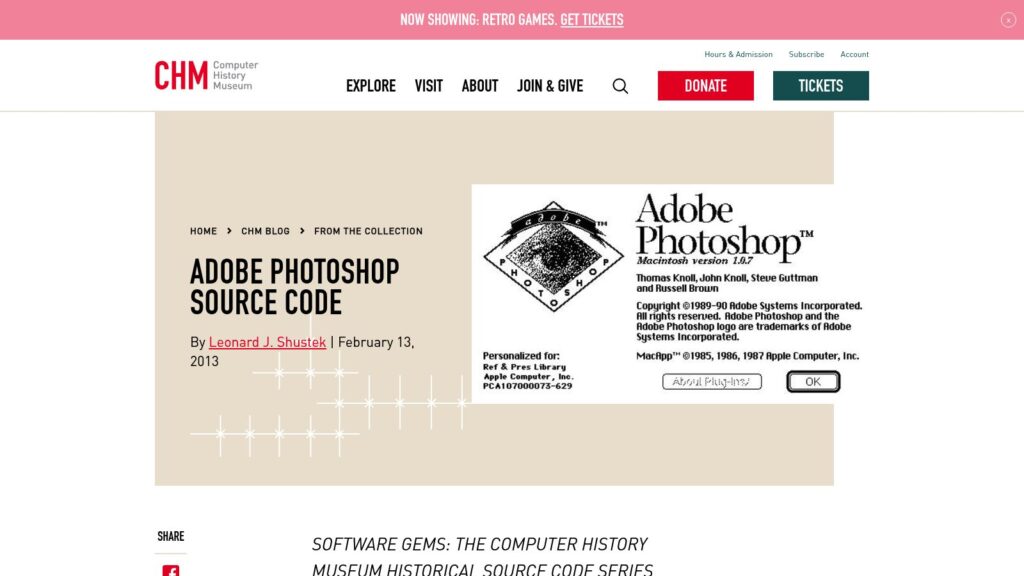
Adobe Photoshop Source Code
Photoshop Origins:
Thomas and John Knoll developed an image editing program in the late 1980s called “Display,” which became “Photoshop.” Adobe licensed it in 1989, leading to its commercial release in 1990. The source code for version 1.0.1, primarily in Pascal, is now available for non-commercial use, showcasing its architectural sophistication and historical significance in software development.

https://computerhistory.org/blog/adobe-photoshop-source-code/

Adobe Photoshop Source Code Read More »
Microsoft Download Center Archive

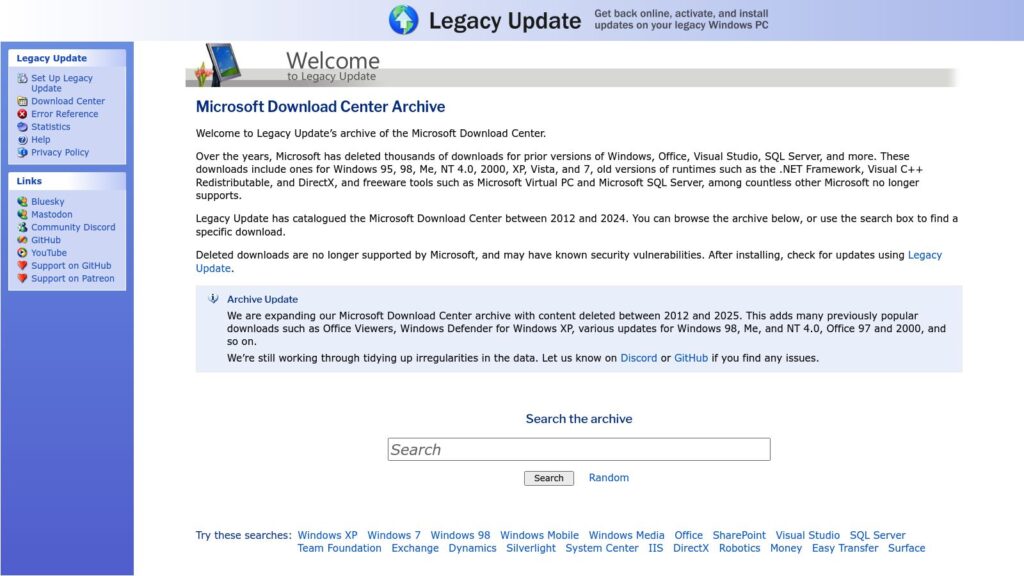
Legacy Update archives deleted Microsoft downloads for legacy Windows versions (95 to 7) and related tools. Users can access these downloads, which may have security risks, via the Internet Archive. Support and contributions are acknowledged, and the site operates independently of Microsoft. Backup data is recommended before using archived software.

https://legacyupdate.net/download-center/

Microsoft Download Center Archive Read More »

How Quake.exe Got Its TCP/IP Stack

Extreme TLDR:
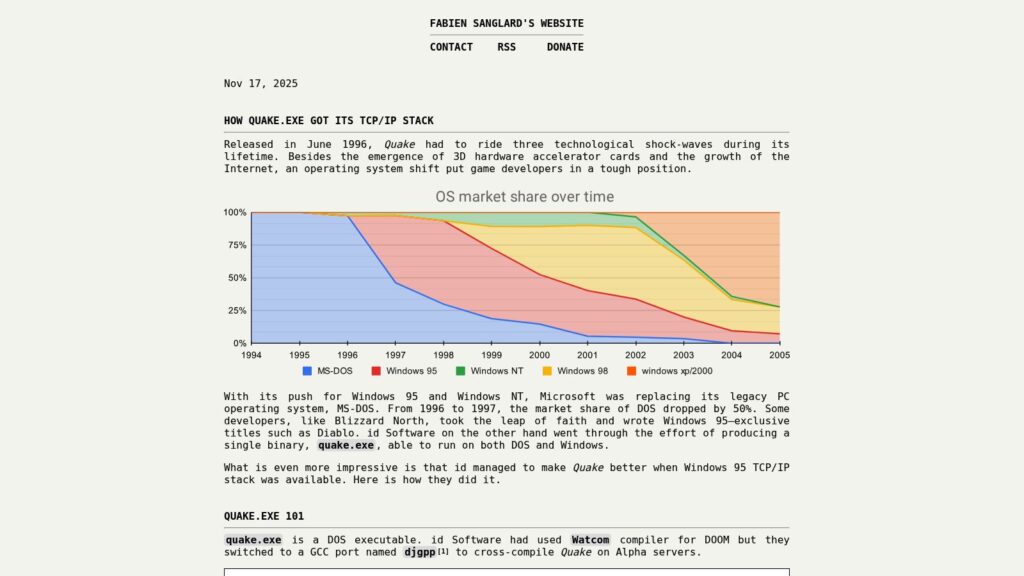
Quake (1996) was developed to run on both DOS and Windows 95 using a single executable, quake.exe. It relied on the djgpp compiler for DOS compatibility, integrating with Windows 95’s DPMI for enhanced performance. Multiplayer support included IPX and TCP/IP, although TCP/IP was challenging to set up on DOS. Mpath’s Chunnel allowed Quake to connect via Windows’ TCP stack, leading to online gaming capabilities. The architecture was complex, involving DLLs and virtual device drivers to facilitate communication between DOS executables and Windows networking. Subsequent versions of Quake moved to native Win32 support.

https://fabiensanglard.net/quake_chunnel/index.html

How Quake.exe Got Its TCP/IP Stack Read More »

Reviving Classic Unix Games: a 20-Year Journey Through Software Archaeology

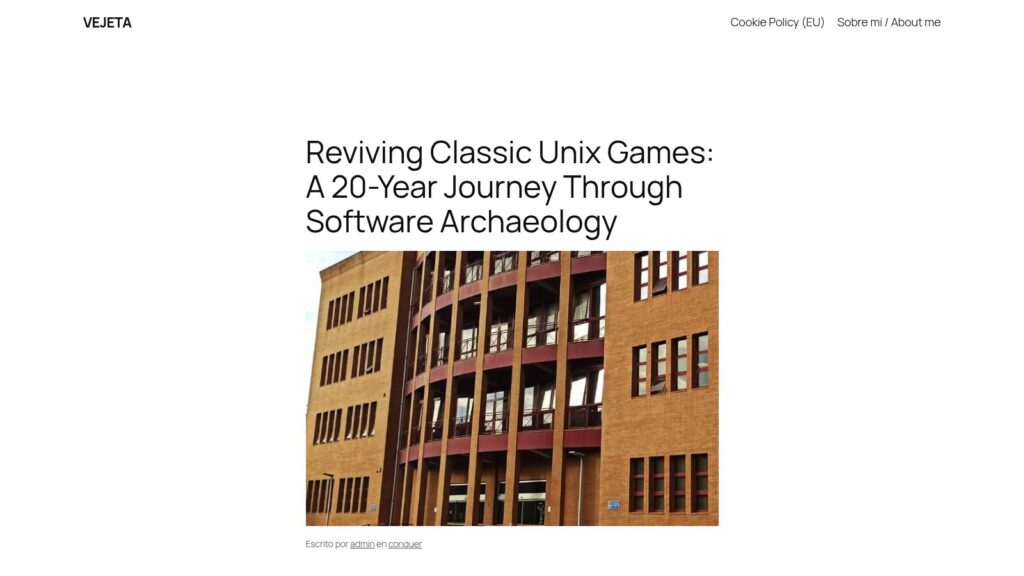
The article recounts a two-decade quest to preserve the 1987 Unix game Conquer. The author traced, contacted, and obtained permissions from the original creators and contributors to relicense the code under GPLv3. During this journey, the author modernized the codebase and leveraged contemporary build and packaging tools to make the game easily accessible on modern Linux distributions. The project highlights challenges in archiving software, the importance of clear licensing and documentation, and the community’s role in preservation. Now, both classic and updated versions are available with modern packaging, bridging the past and future for developers.

https://vejeta.com/reviving-classic-unix-games-a-20-year-journey-through-software-archaeology/

Reviving Classic Unix Games: a 20-Year Journey Through Software Archaeology Read More »

52 Year Old Data Tape Could Contain Unix History • The Register

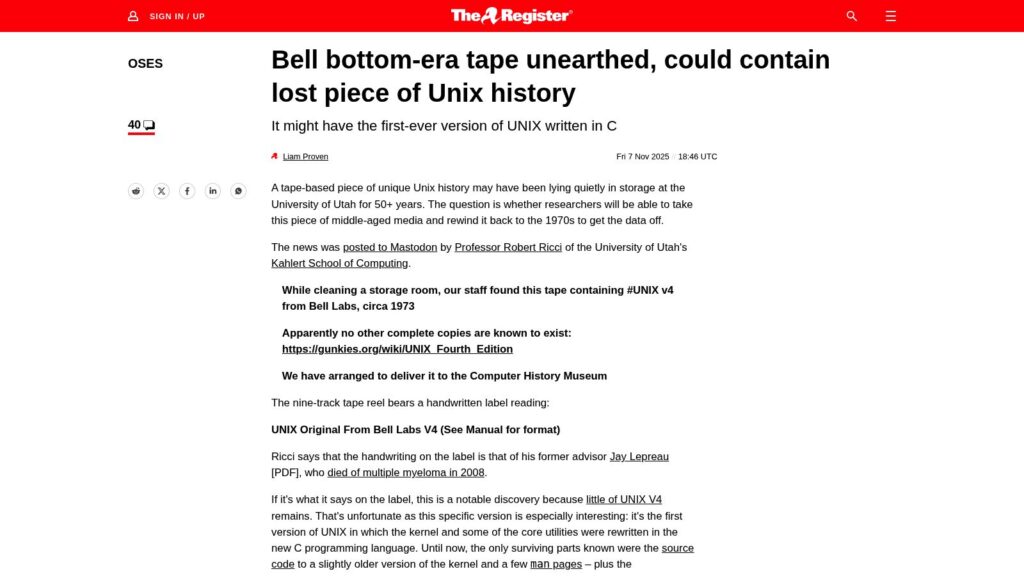
Tape containing the original Unix Fourth Edition, believed to be from the 1970s, discovered at the University of Utah. If recoverable, it may provide vital historical data, including the first Unix version written in C. The tape will be delivered to the Computer History Museum for analysis.

https://www.theregister.com/2025/11/07/unix_fourth_edition_tape_rediscovered/

52 Year Old Data Tape Could Contain Unix History • The Register Read More »

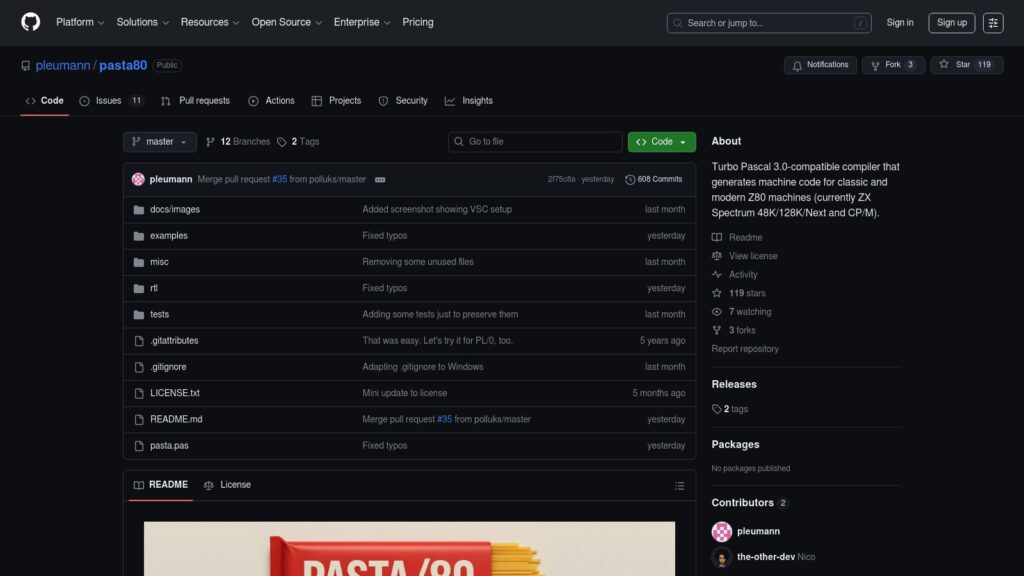
Pleumann/pasta80: Turbo Pascal 3.0-compatible Compiler That Generates Machine Code for Classic and Modern Z80 Machines (currently ZX Spectrum 48K/128K/Next and CP/M).

Turbo Pascal 3.0-compatible compiler, PASTA/80, generates machine code for Z80 machines (ZX Spectrum, CP/M). It uses a single-pass recursive descent approach, focusing on speed over optimization. Supports most Turbo Pascal 3.0 features, including basic types, control structures, file I/O, and overlays (for larger programs). Built using Free Pascal and relies on sjasmplus for assembly. It can output various formats (binary, snapshot, tape) for CP/M and ZX Spectrum targets, with an IDE mode available. Licensed under GPL with a linking exception for binaries.

https://github.com/pleumann/pasta80

Pleumann/pasta80: Turbo Pascal 3.0-compatible Compiler That Generates Machine Code for Classic and Modern Z80 Machines (currently ZX Spectrum 48K/128K/Next and CP/M). Read More »

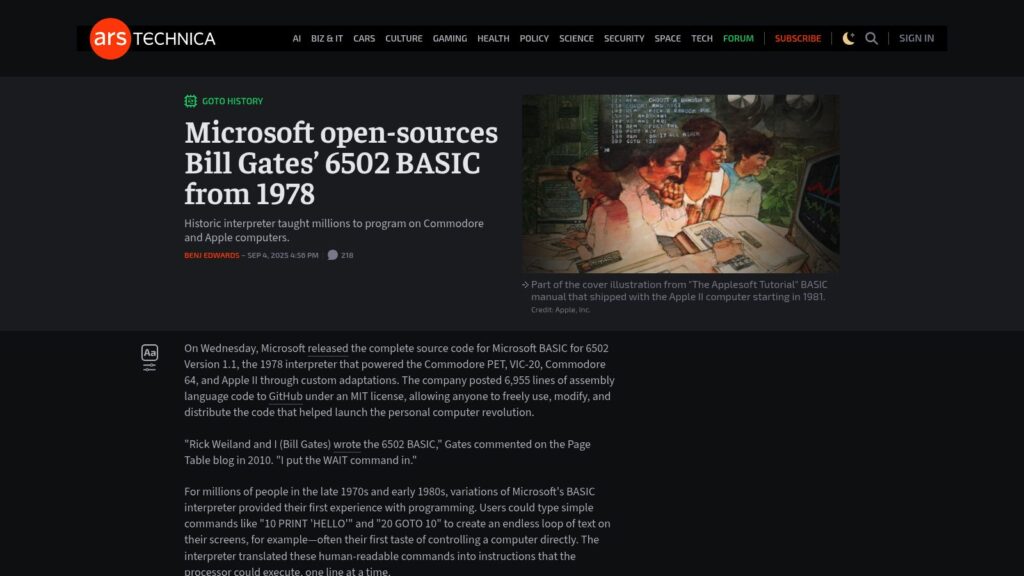
Microsoft Open-sources Bill Gates’ 6502 BASIC From 1978

Microsoft has open-sourced the complete source code of its 6502 BASIC interpreter from 1978, which powered early personal computers like the Commodore PET and Apple II. The code, consisting of 6,955 lines, is available on GitHub for free use, modification, and distribution. This historical release aims to preserve knowledge of early computing for future generations, allowing enthusiasts and researchers to study its optimization techniques. Microsoft’s shift to open-source practices under CEO Satya Nadella contrasts with its previous stance against open source in the 1990s.

https://arstechnica.com/gadgets/2025/09/microsoft-open-sources-bill-gates-6502-basic-from-1978/

Microsoft Open-sources Bill Gates’ 6502 BASIC From 1978 Read More »

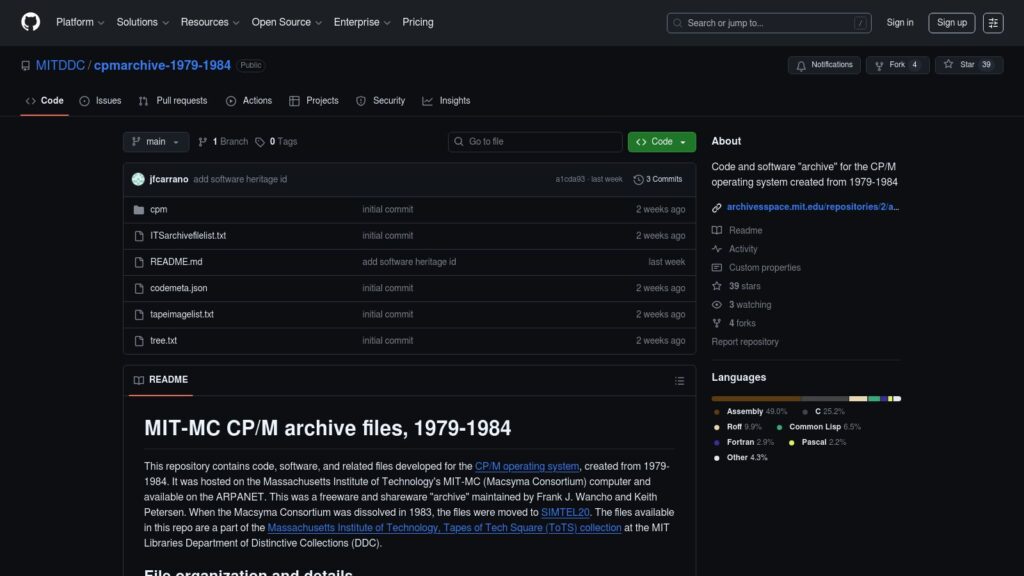
GitHub – MITDDC/cpmarchive-1979-1984: Code and Software “archive” for the CP/M Operating System Created From 1979-1984

CP/M archive (1979-1984) at MIT, containing software/code from CP/M OS, initially hosted on MIT-MC, now part of ToTS collection. Includes 221 ITS archive files, metadata, and organizational documentation.

https://github.com/MITDDC/cpmarchive-1979-1984

GitHub – MITDDC/cpmarchive-1979-1984: Code and Software “archive” for the CP/M Operating System Created From 1979-1984 Read More »

Scroll to Top