hardware

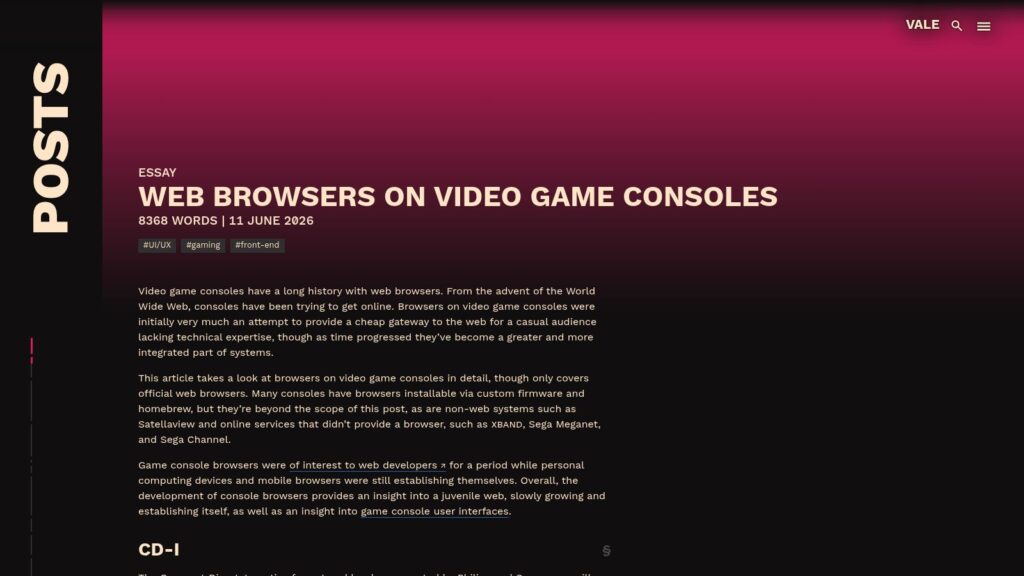
Web Browsers on Video Game Consoles

Video game consoles have featured official web browsers since the early days of the internet, evolving from rudimentary, limited tools like the CD-i’s ‘internet-lite’ browser to more integrated and capable systems such as the Nintendo DS’s Opera browser and the Dreamcast’s multiple browser offerings. These browsers often reflected the technical constraints and intended audiences of their consoles, providing insight into both early web development suited for TV displays and the expansion of online connectivity in gaming culture. The article details the history and features of various console browsers from platforms including the Sega Saturn, Apple Bandai Pippin, Nintendo 64, Game Boy Colour, and PlayStation 2, highlighting their significance in the broader narrative of internet access on gaming hardware.

https://vale.rocks/posts/game-console-browsers

Web Browsers on Video Game Consoles Read More »

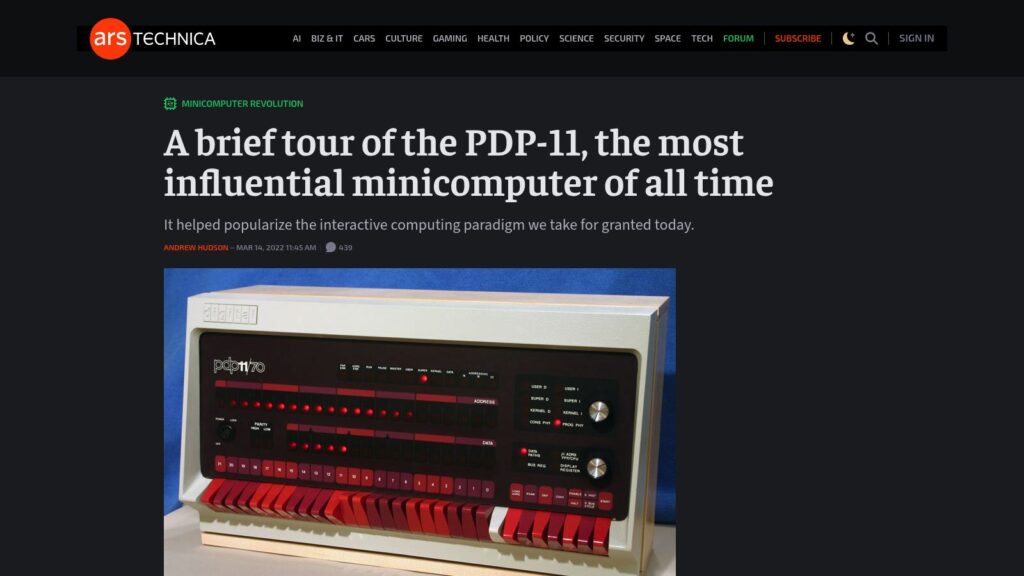
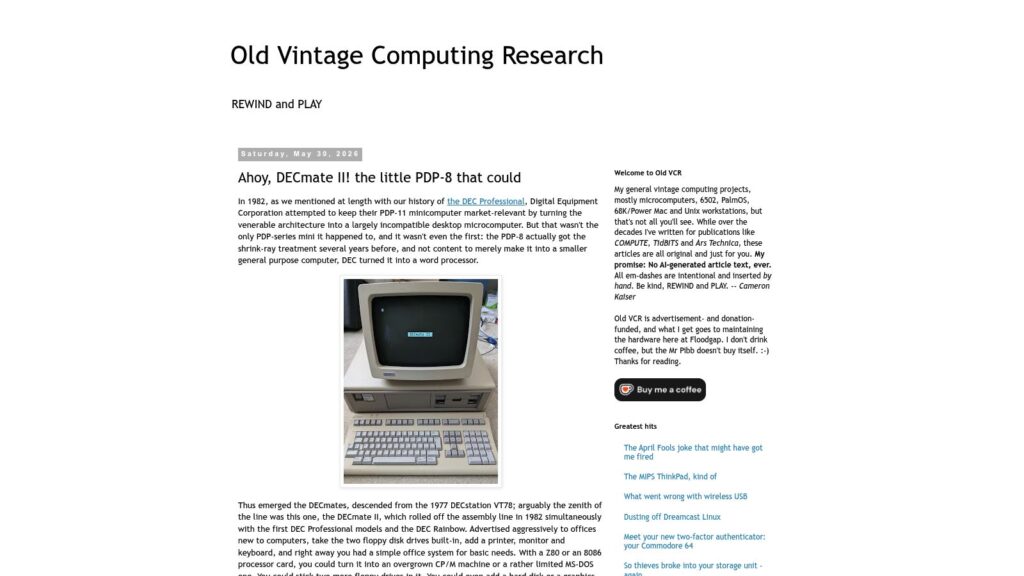
Ahoy, DECmate II! the Little PDP-8 That Could

The article explores the history and significance of the DECmate II, a 1982 desktop microcomputer by Digital Equipment Corporation that condensed the PDP-8 minicomputer architecture into a word-processing machine aimed at office use. It traces the PDP-8’s evolution from the 1960s, highlights the challenges DEC faced with microcomputers, and details the role of the CMOS microprocessor implementations like the Intersil IM6100 and Harris HD-6120 in enabling the DECmate line. The DECmate II featured improvements over earlier models with a more modern design and pricing strategy, making it an accessible office system that maintained much of the PDP-8’s legacy despite compatibility quirks.

https://oldvcr.blogspot.com/2026/05/ahoy-decmate-ii-little-pdp-8-that-could.html

Ahoy, DECmate II! the Little PDP-8 That Could Read More »

How the ZX80 Works

The Sinclair ZX80, launched in 1980 as a low-cost home computer, operates primarily by drawing the TV screen using clever hardware and running mostly NOP instructions rather than focusing on code execution. It achieves video output without a dedicated video chip by using the Z80 CPU, minimal RAM and ROM, and TTL logic chips to multiplex the address and data buses, intercepting reads in the high address mirror area to generate video signals through character ROM lookups and timing the CPU clock precisely to match TV scan lines, enabling the screen to be refreshed 50 times per second while handling input and memory access with minimal hardware complexity.

http://blog.tynemouthsoftware.co.uk/2019/10/how-the-zx80-works.html

How the ZX80 Works Read More »

How a Cambridge Project Rescues Fading Floppy Disk Data

Leontien Talboom of Cambridge University Libraries led the “Future Nostalgia” project to preserve data on aging floppy disks, which are degrading physically and losing the tacit knowledge needed to access their contents. By collaborating with the retro computing community and developing specialized techniques to read various formats, the project aims to transfer and maintain floppy disk data sustainably before it is lost.

https://spectrum.ieee.org/floppy-disk-data-preservation-archives

How a Cambridge Project Rescues Fading Floppy Disk Data Read More »

The Listening Museum — 36 Keyboards, Sound-Mapped

The Data Drop presents “The Listening Museum,” an interactive collection of 36 mechanical keyboards and switches spanning over 40 years and 8 switch families, featuring more than 500 audio samples. Users can click on any keyboard card to explore detailed information, then type on their own keyboard to hear corresponding sounds, offering a curated audio experience sourced from the open mechanical keyboard community to illustrate the diverse acoustics of different keyboard designs.

https://sheets.works/data-viz/keyboard-sounds

The Listening Museum — 36 Keyboards, Sound-Mapped Read More »

Why Zip Drives Dominated the 90s, Then Vanished Almost Overnight

Zip drives revolutionized portable storage in the 1990s by offering significantly higher capacity (starting at 100MB) and faster speeds than traditional floppy disks, becoming popular with users and PC manufacturers like Dell and Apple. However, reliability issues known as the “click of death,” combined with the rise of cheaper and more versatile formats like CDs and USB flash drives, led to the rapid decline and eventual disappearance of Zip drives from the market by the early 2000s.

https://www.xda-developers.com/zip-drives-dominated-90s-vanished-almost-overnight/

Why Zip Drives Dominated the 90s, Then Vanished Almost Overnight Read More »

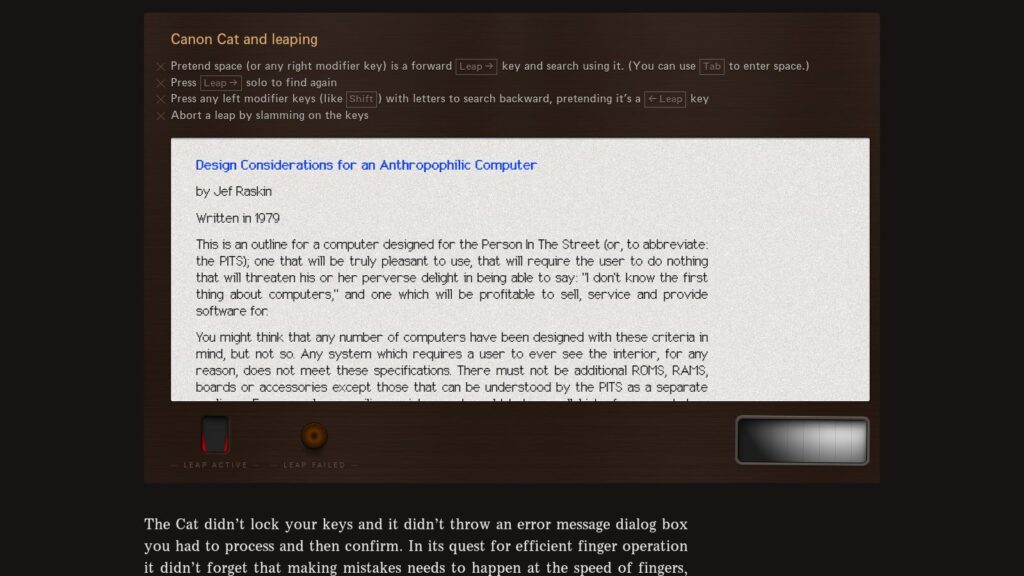
I Don’t Know What Is Apple’s Endgame for the Fn/Globe Key, and I’m Not Sure Apple Knows Either

Apple’s Fn/Globe key evolution reflects its struggle with modifier key functionality. Originally designed to simulate missing keys on compact keyboards, the Fn key expanded tasks but lacked standardization across devices. With the introduction of the Globe key on iPads and Macs, Apple introduced new shortcuts, but inconsistencies between devices and confusing user experiences emerged. The challenge lies in integrating a coherent system across third-party keyboards while managing existing shortcuts, ultimately complicating usage and confusing users. The article urges Apple to reconsider and simplify its approach to modifier keys for improved functionality and user experience.

https://aresluna.org/fn/

I Don’t Know What Is Apple’s Endgame for the Fn/Globe Key, and I’m Not Sure Apple Knows Either Read More »

Macbook Neo Shows How Far Apple’s Repairability Design Has Fallen

iFixit offers guides, forums, teardowns, and a repair assistant for fixing items. It promotes community involvement and the Right to Repair movement, while providing a range of quality parts and tools in its store. The article discusses how Apple’s early laptops were designed for repairability, featuring easily replaceable keyboards, batteries, RAM, and storage, in contrast to current models that prioritize design over maintenance. The need for modular components is emphasized as essential for longevity and usability, especially in a rapidly evolving tech landscape.

https://www.ifixit.com/News/115995/how-apple-used-to-design-its-laptops-for-repairability

Macbook Neo Shows How Far Apple’s Repairability Design Has Fallen Read More »

Scroll to Top