technology

Thin Is In

The piece discusses the historical context of “thick” vs. “thin” clients in computing, highlighting a shift towards thin clients re-emerging through AI interactions. In the past, thick clients (like PCs) dominated, but with AI, the focus on networks for processing has made complex local UIs less relevant, as chat-based interfaces allow for easy interaction regardless of device capability. Future AI advancements suggest an increased reliance on cloud computing due to better model performance and lower costs for shared resources. However, rising memory shortages could impact technology availability and prices, as demand surges from AI developments. Overall, the trend leans towards minimal local compute reliance due to enhanced cloud capabilities.

https://stratechery.com/2026/thin-is-in/
Thin Is In Read More »

Rise of the Triforce

Sega partnered with Nintendo and Namco to create the Triforce arcade system, leveraging GameCube technology to revitalize the arcade scene in the face of declining interest. The Triforce, featuring unique game storage and innovative save options, aimed to create persistent player engagement through personalized high-quality arcade experiences. Despite the collaboration, Nintendo did not develop games for it, leading to only nine titles being released, including notable arcade adaptations of popular franchises like Mario Kart.

https://dolphin-emu.org/blog/2026/02/16/rise-of-the-triforce/

Rise of the Triforce Read More »

Press Start: How Controllers Shaped Video Game Design—and Where Interfaces May Go Next

Game controllers have shaped video game interfaces, evolving from simple designs to complex navigational systems. Modern gaming incorporates varied features, enhancing player experience while maintaining intuitive interaction through consistent controller layouts. As technology advances with AR/VR, these navigation principles can inform broader UI design across platforms, emphasizing user engagement and seamless accessibility.

https://www.figma.com/blog/press-start-video-game-navigation/

Press Start: How Controllers Shaped Video Game Design—and Where Interfaces May Go Next Read More »

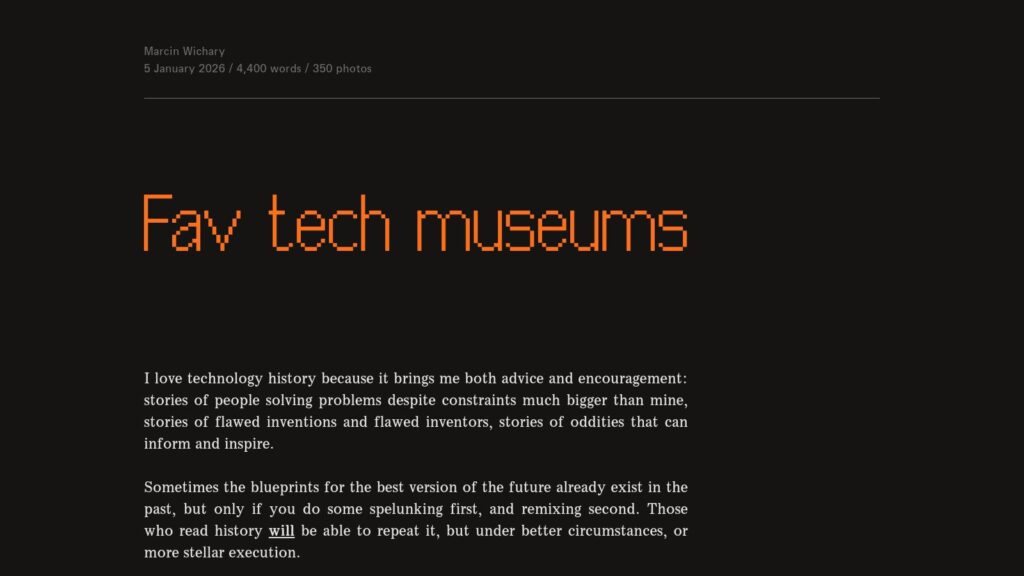
Fav Tech Museums

Marcin Wichary shares his love for technology history through a photo essay detailing his favorite tech museums. He reflects on the significance of exploring the past for inspiration and learning. He highlights six standout museums visited, like Taiwan’s National Railway Museum and Spain’s Museu de la Tècnica, praising their creativity, craftsmanship, and engaging exhibits. Wichary also mentions other noteworthy museums, offering insights into their unique qualities and experiences, while critically assessing a few he found lacking. His enthusiasm for tech history and importance of well-curated exhibitions resonates throughout the narrative.

https://aresluna.org/fav-tech-museums/

Fav Tech Museums Read More »

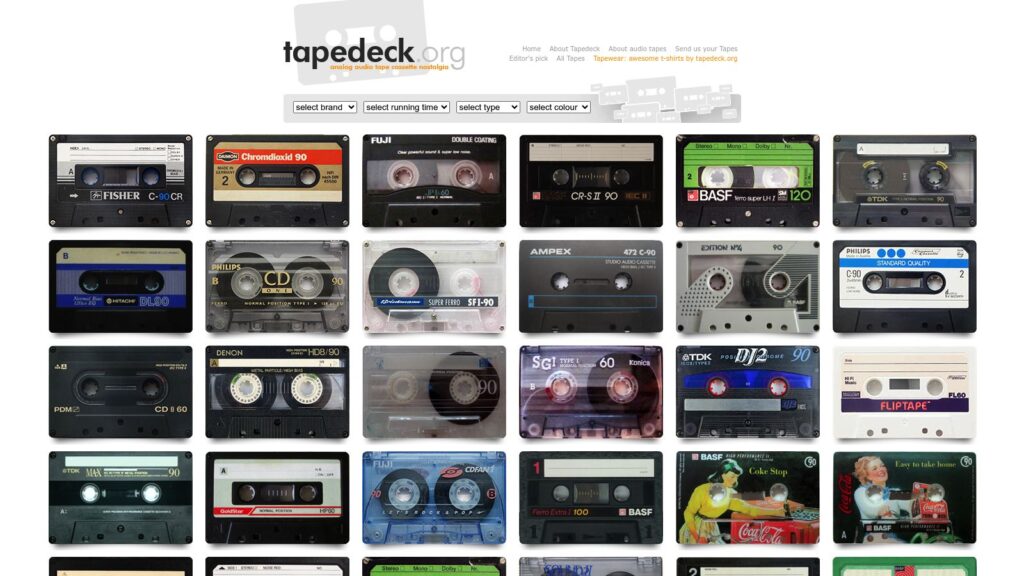
Analog Audio Tape Cassette Nostalgia

Tapedeck.org showcases the design and history of audio tape cassettes from the 1960s to the 1990s, highlighting their popularity, especially with the launch of the Sony Walkman. The site invites users to share images of their cassettes and features a collection of nearly 1,000 tapes from various brands. Despite declining use in the West, cassettes remain common in many developing countries.

https://www.tapedeck.org/

Analog Audio Tape Cassette Nostalgia Read More »

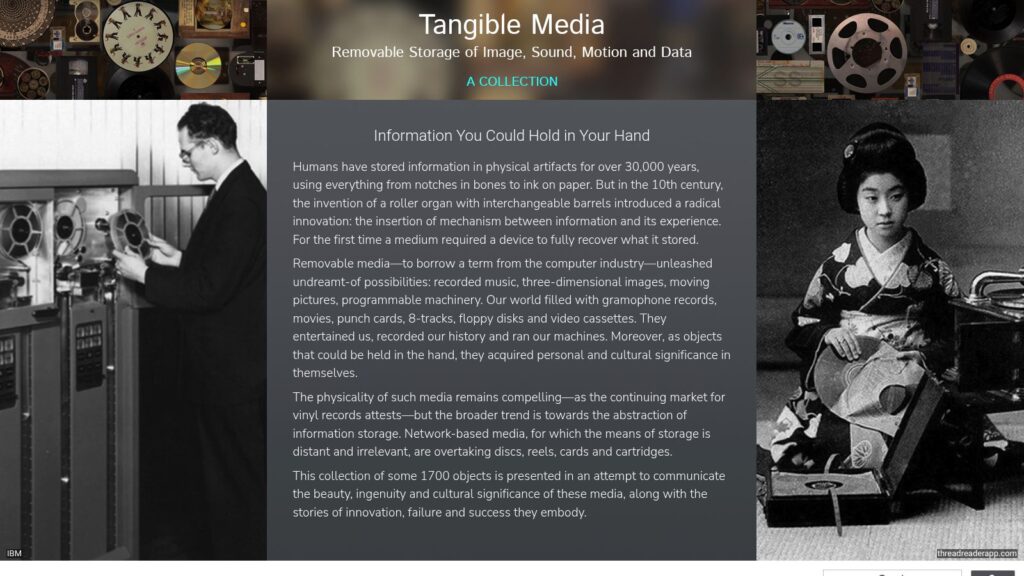
Tangible Media: a Historical Collection of Information Storage Technology

Humans have stored information for over 30,000 years. The 10th-century roller organ introduced the need for a device to access this info. Removable media like records, tapes, and cards enhanced cultural significance. Despite a trend toward network-based storage, physical media still hold value. This collection of 1,700 artifacts showcases the beauty and innovation of such media, reflecting their historical impact on society.

https://tangiblemediacollection.com/

Tangible Media: a Historical Collection of Information Storage Technology Read More »

Typewriter Plotters

Typewriter plotters utilize ballpoint pens to draw text and graphics. Panasonic produced multiple models, such as the RK-P400C with RS-232 for computer control and the RK-P440, requiring an external interface. Other manufacturers included Silver Reed, Smith Corona, and Brother, with each offering unique features. These devices operated with colored pens and were portable, appealing to retro computing enthusiasts. Basic plotters were also integrated into calculators and music keyboards, while some early personal computers had built-in plotters as accessories.

https://biosrhythm.com/?p=2143

Typewriter Plotters Read More »

A Digital Dark Age? The People Rescuing Forgotten Knowledge Trapped on Old Floppy Disks

Cambridge University Library is working to recover valuable historical information trapped on old floppy disks, including items from Stephen Hawking’s archives. The “Future Nostalgia” project addresses challenges posed by legacy data storage, as many disks risk data loss due to degrading materials. Archivists face technical hurdles in accessing and translating content from various disk formats, as finding compatible hardware is increasingly difficult. The project aims to preserve these forgotten documents for future generations and involves public participation, inviting individuals to bring their own floppy disks for exploration.

https://www.bbc.com/future/article/20251009-rescuing-knowledge-trapped-on-old-floppy-disks

A Digital Dark Age? The People Rescuing Forgotten Knowledge Trapped on Old Floppy Disks Read More »

Build Your Own Commodore 64 Cartridge

IEEE Spectrum published a guide on building a Commodore 64 cartridge using free software and affordable parts. The author, Stephen Cass, shares his experience creating a demo program for a traveling exhibit featuring the notable 6502 microprocessor from the C64. The process involved programming in 6502 assembly, utilizing modern tools, and assembling a cartridge with basic electronic components. Despite initial technical issues, the final product successfully showcased the capabilities of the C64, highlighting the accessibility of retro programming with current resources.

https://spectrum.ieee.org/commodore-64-cartridge

Build Your Own Commodore 64 Cartridge Read More »

Scroll to Top