October 2025

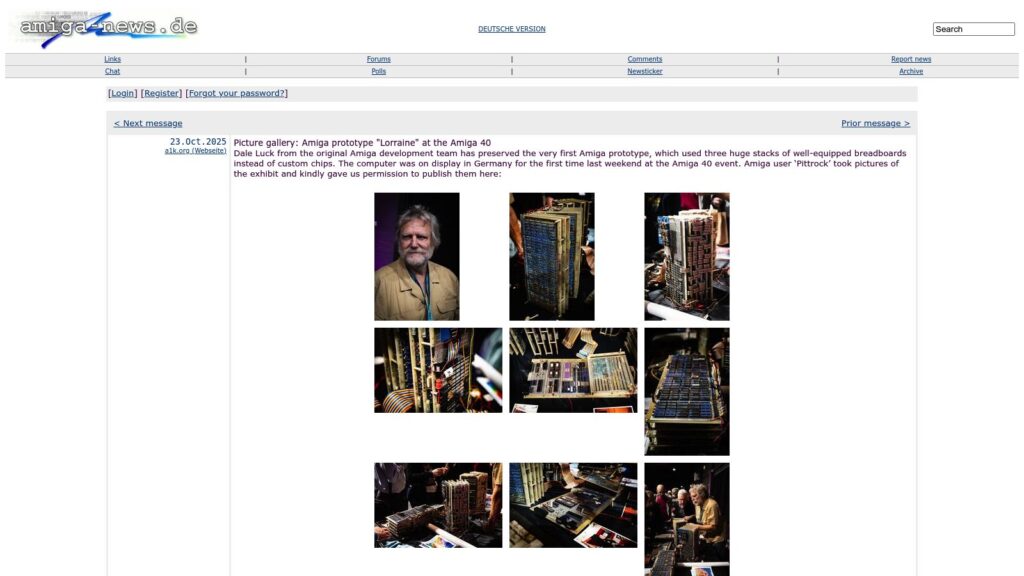
Amiga prototype “Lorraine” at the Amiga 40

The earliest Amiga prototype, known as Lorraine and built from three sizable breadboard stacks, was displayed publicly at the Amiga 40 event in Germany. Maintained by original team member Dale Luck, it was shown in Germany for the first time, with event photos provided and published by Amiga user ‘Pittrock.’

https://www.amiga-news.de/en/news/AN-2025-10-00110-EN.html

Amiga prototype “Lorraine” at the Amiga 40 Read More »

History of Internet: Ubiquity’s Seamless Web

The Internet has evolved through 7 phases:

  1. Original Internet: 1970s connection of computer networks enabling collaboration.
  2. Mobile Internet: 2000s portability via smartphones connecting billions.
  3. Internet of Things (IoT): All devices interconnected, enhancing various sectors.
  4. Internet of AI Agents: Active AI systems shaping economies through interaction.
  5. Internet of Senses: Multisensory experiences and integrated perception.
  6. Ubiquitous Internet: Seamless global connectivity across remote areas.
  7. Quantum Internet: Future connectivity with quantum communication enhancing security and capabilities.

Each phase builds on the last, transforming how we connect and interact with technology, ultimately leading to an intelligent and universally accessible digital landscape.

https://spectrum.ieee.org/history-of-internet-7-phases

History of Internet: Ubiquity’s Seamless Web Read More »

How to Speak to a Computer

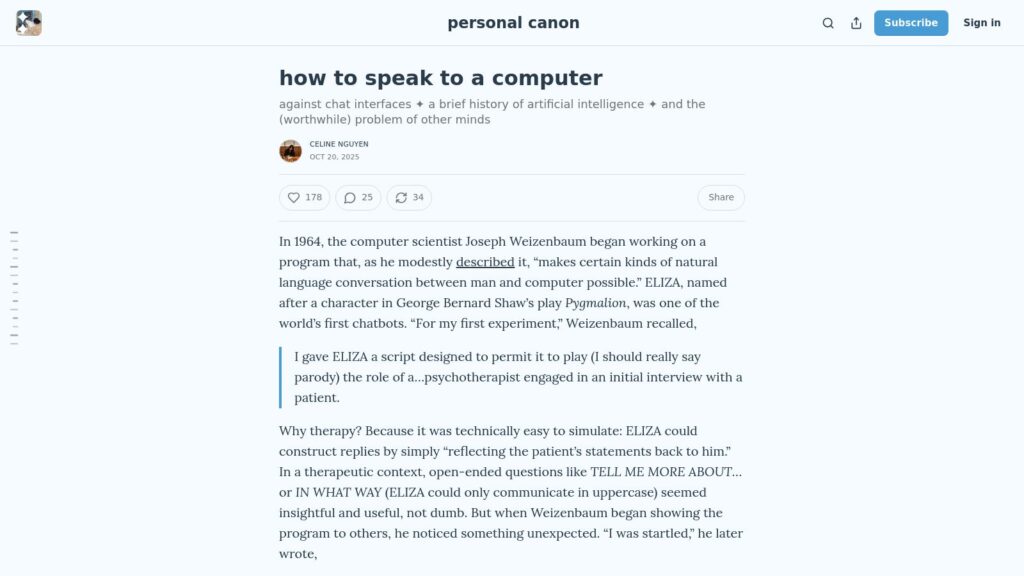
Joseph Weizenbaum created ELIZA in 1964, an early chatbot simulating therapy by reflecting users’ statements. Unexpectedly, users grew emotionally attached to ELIZA, projecting human traits onto it. Fast forward to 2022, OpenAI’s ChatGPT made AI accessible, rapidly gaining over 100 million users. Now, chatbots serve complex roles including romantic partners and therapists, prompting ethical considerations. The history of AI spans symbolic and statistical approaches, leading to today’s language models, which are statistical products of vast datasets rather than explicit rules. Metaphorical interfaces, such as the desktop metaphor for personal computers, enhance user understanding of technology. ChatGPT leverages conversation as its guiding metaphor, allowing intuitive interaction with AI.

https://www.personalcanon.com/p/how-to-speak-to-a-computer
How to Speak to a Computer Read More »

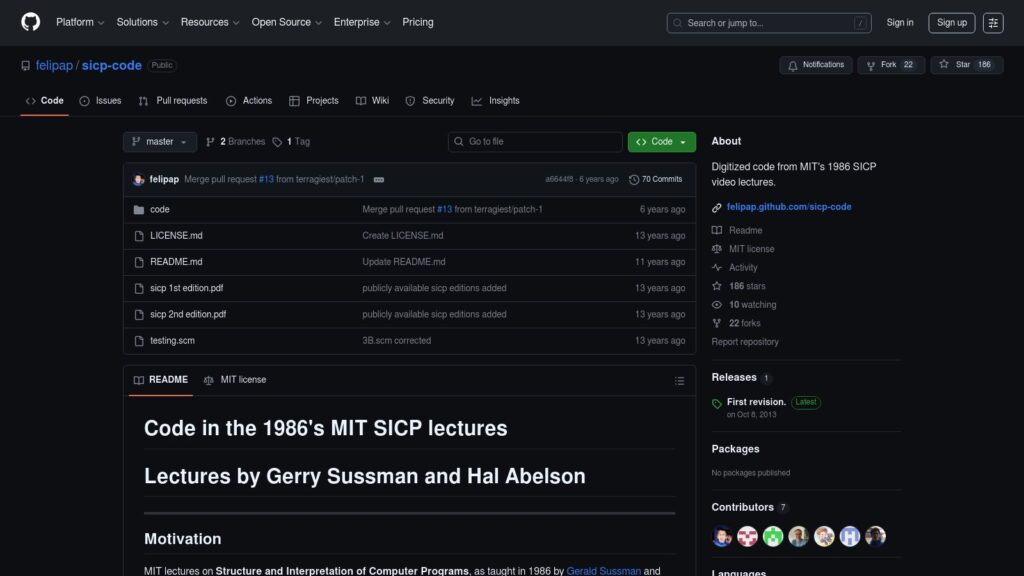
Felipap/sicp-code: Digitized Code From MIT’s 1986 SICP Video Lectures.

Digitized code from MIT’s 1986 SICP lectures by Sussman and Abelson, aimed to improve readability of poorly visualized code in videos. Contains transcription of lecture content, marked for clarity, with notes and corrections for better comprehension.

Visit the repository for resources and discussions.

https://github.com/felipap/sicp-code

Felipap/sicp-code: Digitized Code From MIT’s 1986 SICP Video Lectures. Read More »

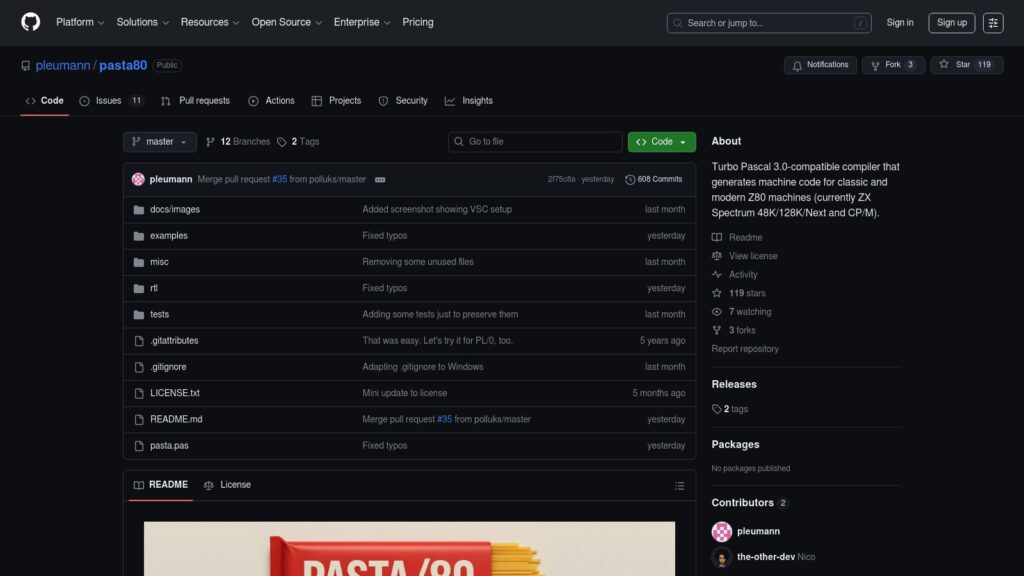
Pleumann/pasta80: Turbo Pascal 3.0-compatible Compiler That Generates Machine Code for Classic and Modern Z80 Machines (currently ZX Spectrum 48K/128K/Next and CP/M).

Turbo Pascal 3.0-compatible compiler, PASTA/80, generates machine code for Z80 machines (ZX Spectrum, CP/M). It uses a single-pass recursive descent approach, focusing on speed over optimization. Supports most Turbo Pascal 3.0 features, including basic types, control structures, file I/O, and overlays (for larger programs). Built using Free Pascal and relies on sjasmplus for assembly. It can output various formats (binary, snapshot, tape) for CP/M and ZX Spectrum targets, with an IDE mode available. Licensed under GPL with a linking exception for binaries.

https://github.com/pleumann/pasta80

Pleumann/pasta80: Turbo Pascal 3.0-compatible Compiler That Generates Machine Code for Classic and Modern Z80 Machines (currently ZX Spectrum 48K/128K/Next and CP/M). Read More »

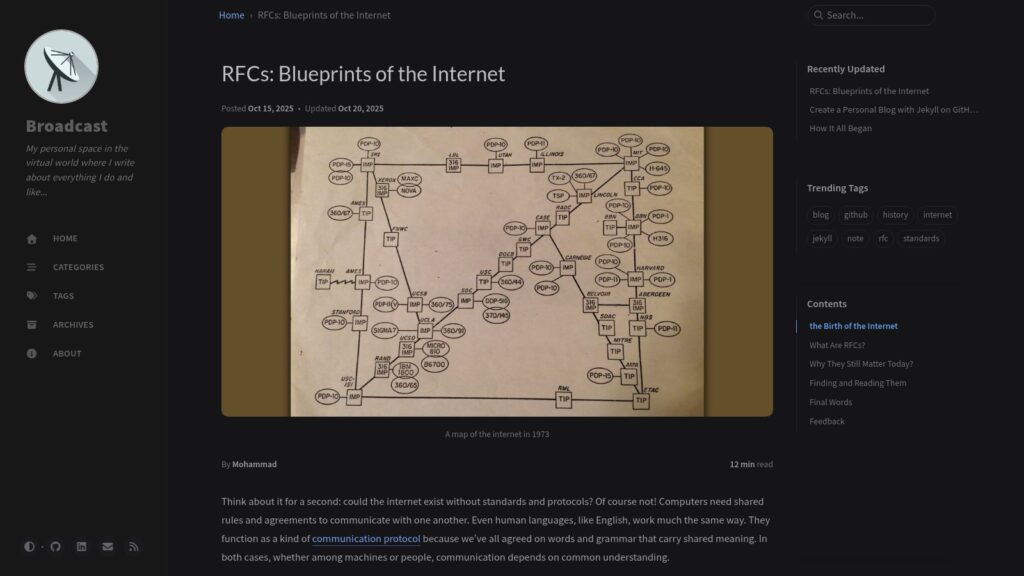
What Are RFCs? The Forgotten Blueprints of the Internet

RFCs (Requests for Comments) are documents that establish internet standards and communication protocols, vital for technology and IT professionals. Originating in 1969, they record development ideas and standards, helping ensure consistent operation across the network. Key to the internet’s history, early networking efforts, including ARPANET, laid the groundwork. RFCs explain protocols like TCP/IP and DNS, serving as essential references for reliable system design. Understanding RFC terminology is crucial for accurate implementation. The RFC Editor and IETF maintain and publish these documents, which are foundational for internet architecture and ongoing technological evolution.

https://ackreq.github.io/posts/what-are-rfcs/

What Are RFCs? The Forgotten Blueprints of the Internet Read More »

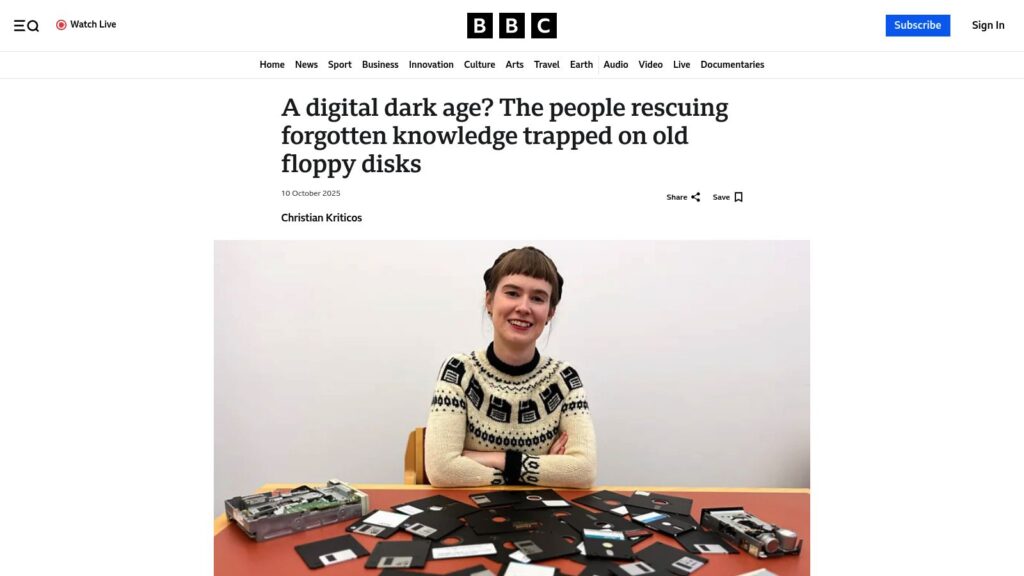
A Digital Dark Age? The People Rescuing Forgotten Knowledge Trapped on Old Floppy Disks

Cambridge University Library is working to recover valuable historical information trapped on old floppy disks, including items from Stephen Hawking’s archives. The “Future Nostalgia” project addresses challenges posed by legacy data storage, as many disks risk data loss due to degrading materials. Archivists face technical hurdles in accessing and translating content from various disk formats, as finding compatible hardware is increasingly difficult. The project aims to preserve these forgotten documents for future generations and involves public participation, inviting individuals to bring their own floppy disks for exploration.

https://www.bbc.com/future/article/20251009-rescuing-knowledge-trapped-on-old-floppy-disks

A Digital Dark Age? The People Rescuing Forgotten Knowledge Trapped on Old Floppy Disks Read More »

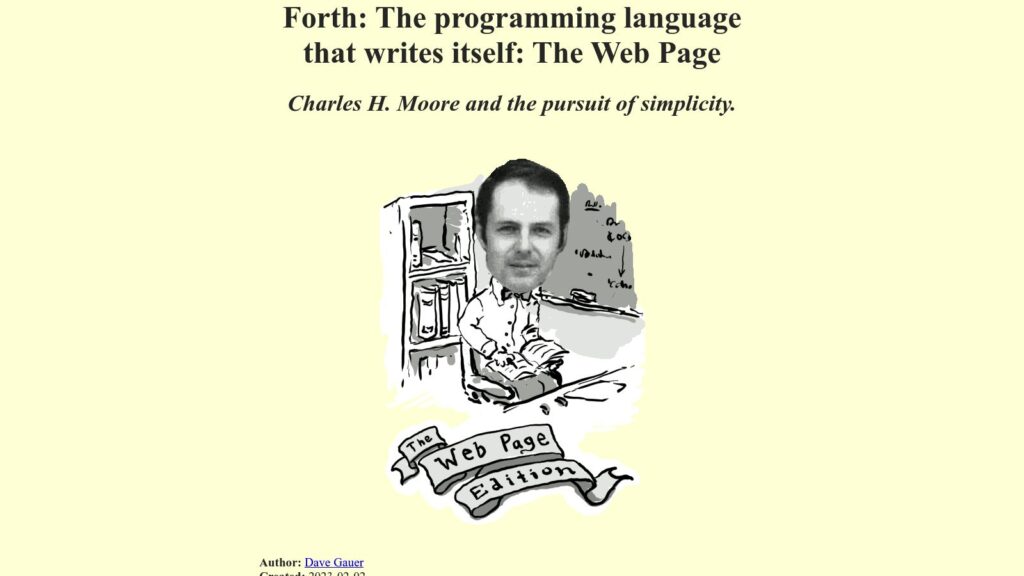
Forth: The Programming Language That Writes Itself: The Web Page

Extreme TLDR:
Dave Gauer explores Forth, a programming language by Chuck Moore, known for its simplicity and flexibility, invoking memories of Usenet and its folklore. Forth’s unique features include Reverse Polish Notation (RPN), stack-based operations, and concatenative programming, allowing seamless manipulation of data without explicit named variables. Gauer contrasts applicative programming with the concise, sequential nature of concatenative languages like Joy, emphasizing the power of combinators in creating higher-order functions and achieving universal computation with minimal constructs like S and K.

https://ratfactor.com/forth/the_programming_language_that_writes_itself.html

Forth: The Programming Language That Writes Itself: The Web Page Read More »

Your Review: Project Xanadu

Extreme TL;DR: “Project Xanadu,” envisioned by Vannevar Bush in 1945 as the “memex,” aimed to revolutionize knowledge sharing but remained unrealized due to lack of development. Doug Engelbart and Ted Nelson later pursued hypertext systems but faced challenges. Engelbart created groundbreaking tools (e.g., mouse, hypermedia) showcased in “The Mother of All Demos,” while Nelson’s Xanadu project, aiming for interconnected documents and copyright solutions, struggled with funding and technical feasibility, ultimately fading into obscurity.

https://www.astralcodexten.com/p/your-review-project-xanadu-the-internet

Your Review: Project Xanadu Read More »

Scroll to Top