October 2025

The IDEs We Had 30 Years Ago… and We Lost
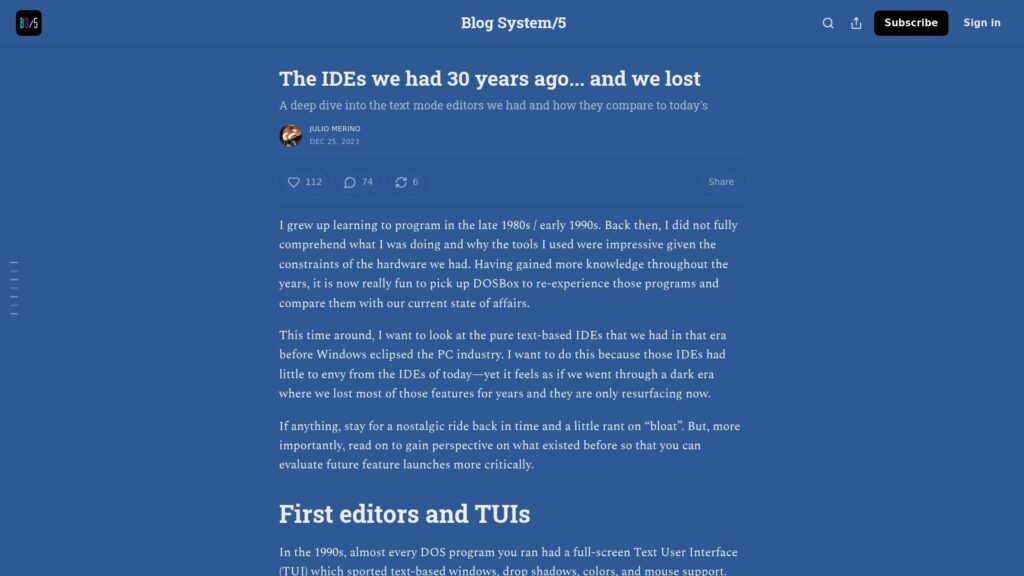
The author reminisces about the text-based IDEs of the late 1980s and early 1990s, highlighting their features and usability compared to modern tools. The discussion contrasts the powerful, integrated experiences of early IDEs like Borland Turbo C++ with today’s options, which the author feels have lost clarity and simplicity. Despite the advancement in graphical capabilities and programming features, there is a sentiment that user experiences have regressed and that current TUI (Text User Interface) tools still lack the intuitiveness and functionality of their predecessors. The article also critiques modern software bloat, notes the resurgence of TUI tools aided by technologies like Language Server Protocol, and concludes with thoughts on their relevance, particularly for remote development.

https://blogsystem5.substack.com/p/the-ides-we-had-30-years-ago-and

The IDEs We Had 30 Years Ago… and We Lost Read More »
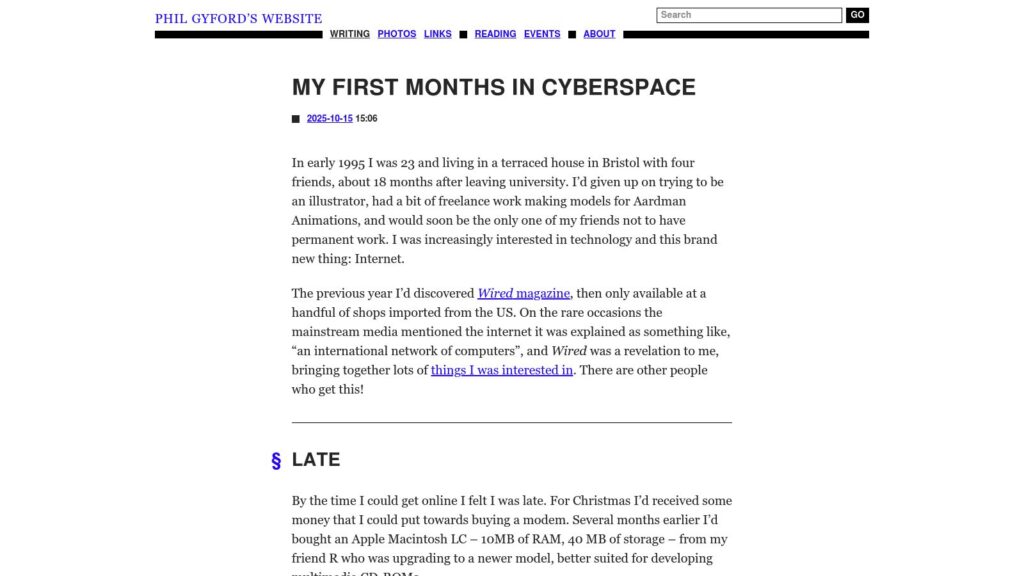
My First Months in Cyberspace

In early 1995, Phil Gyford explored the internet at age 23, living in Bristol. After abandoning a career as an illustrator, he became enamored with technology and purchased a modem and an Apple Macintosh LC to connect to the burgeoning online world, which required significant effort to set up. Despite challenges, Gyford found joy in email, Usenet, and creating web pages, providing a platform for instant, global communication and self-expression that transformed his social connections and experiences.

https://www.gyford.com/phil/writing/2025/10/15/1995-internet/

My First Months in Cyberspace Read More »

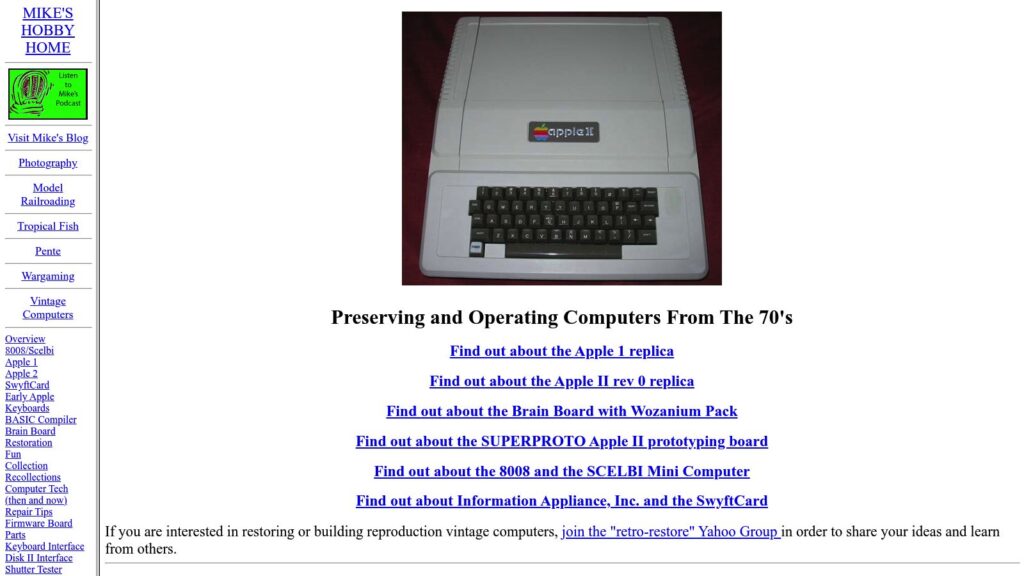
Apple II

Mike’s website highlights his enthusiasm for vintage computers, mainly Apple models, as well as a variety of tech hobbies. He restores, builds replicas, and operates classic machines, sharing his experiences and advice with the community. Mike believes these old computers should be kept running, not just preserved, and provides information, kits, and resources for other hobbyists. His site also covers related interests like repair tips, history, and new ongoing projects.

https://willegal.net/appleii/appleii-first_page.htm

Apple II Read More »

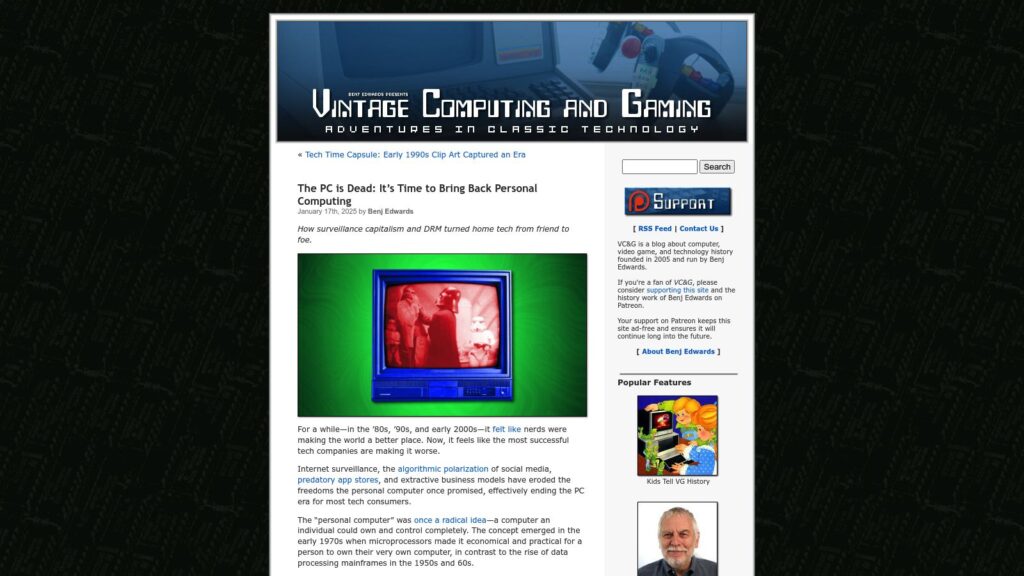
The PC Is Dead: It’s Time to Bring Back Personal Computing

Tech critic Benj Edwards argues that personal computing, once a symbol of individual control and creativity, has been undermined by surveillance capitalism and DRM, leading to a loss of autonomy for users. He emphasizes the need to reclaim digital freedoms by advocating for systemic reforms such as privacy legislation, Right to Repair laws, and the repeal of restrictive DRM practices. Edwards believes that personal computing can flourish again, provided society prioritizes user rights and addresses the current exploitative business models of tech companies. The call to action includes supporting open-source projects and fostering a movement towards Personal Computer 2.0, emphasizing that true digital freedom is essential for maintaining personal liberties in today’s interconnected world.

https://www.vintagecomputing.com/index.php/archives/3292/the-pc-is-dead-its-time-to-make-computing-personal-again

The PC Is Dead: It’s Time to Bring Back Personal Computing Read More »

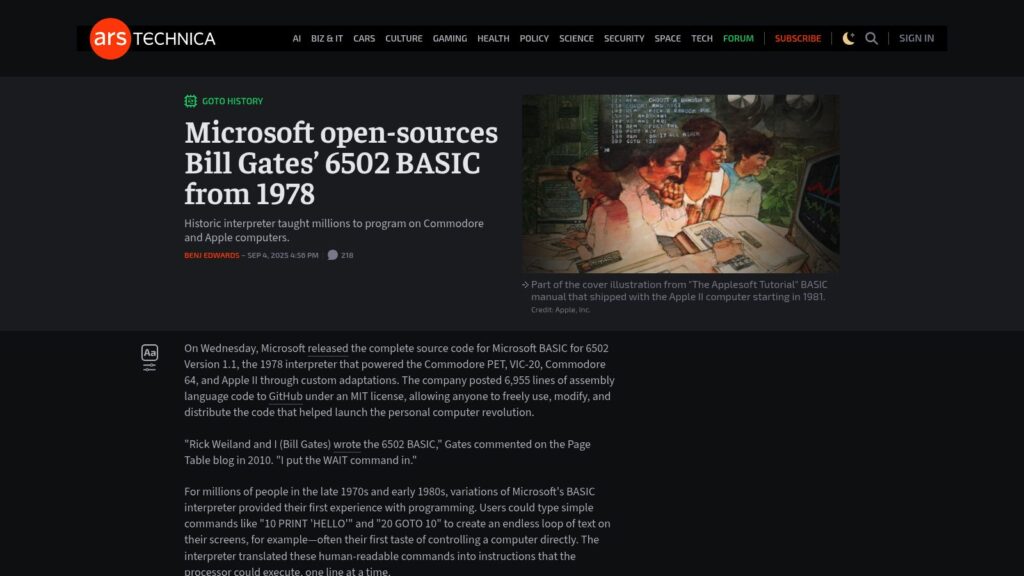
Microsoft Open-sources Bill Gates’ 6502 BASIC From 1978

Microsoft has open-sourced the complete source code of its 6502 BASIC interpreter from 1978, which powered early personal computers like the Commodore PET and Apple II. The code, consisting of 6,955 lines, is available on GitHub for free use, modification, and distribution. This historical release aims to preserve knowledge of early computing for future generations, allowing enthusiasts and researchers to study its optimization techniques. Microsoft’s shift to open-source practices under CEO Satya Nadella contrasts with its previous stance against open source in the 1990s.

https://arstechnica.com/gadgets/2025/09/microsoft-open-sources-bill-gates-6502-basic-from-1978/

Microsoft Open-sources Bill Gates’ 6502 BASIC From 1978 Read More »

Scroll to Top