hardware

The Listening Museum — 36 Keyboards, Sound-Mapped
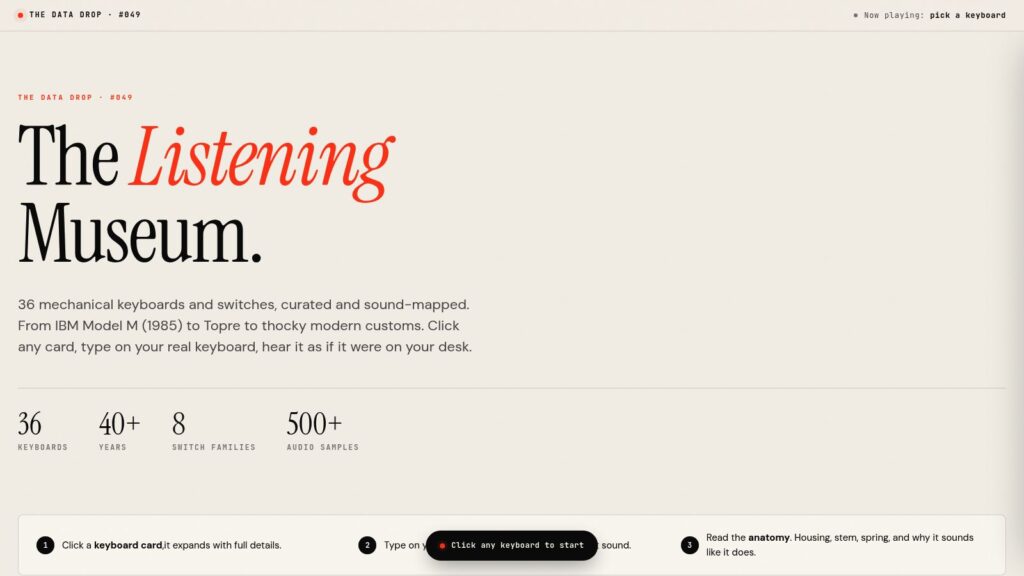
The Data Drop presents “The Listening Museum,” an interactive collection of 36 mechanical keyboards and switches spanning over 40 years and 8 switch families, featuring more than 500 audio samples. Users can click on any keyboard card to explore detailed information, then type on their own keyboard to hear corresponding sounds, offering a curated audio experience sourced from the open mechanical keyboard community to illustrate the diverse acoustics of different keyboard designs.

https://sheets.works/data-viz/keyboard-sounds

The Listening Museum — 36 Keyboards, Sound-Mapped Read More »
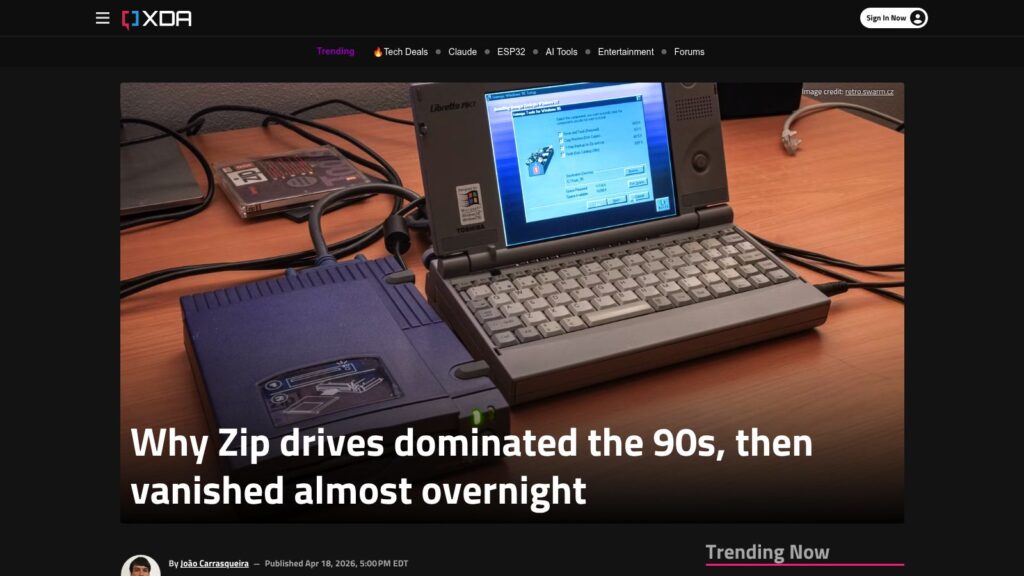
Why Zip Drives Dominated the 90s, Then Vanished Almost Overnight

Zip drives revolutionized portable storage in the 1990s by offering significantly higher capacity (starting at 100MB) and faster speeds than traditional floppy disks, becoming popular with users and PC manufacturers like Dell and Apple. However, reliability issues known as the “click of death,” combined with the rise of cheaper and more versatile formats like CDs and USB flash drives, led to the rapid decline and eventual disappearance of Zip drives from the market by the early 2000s.

https://www.xda-developers.com/zip-drives-dominated-90s-vanished-almost-overnight/

Why Zip Drives Dominated the 90s, Then Vanished Almost Overnight Read More »

I Don’t Know What Is Apple’s Endgame for the Fn/Globe Key, and I’m Not Sure Apple Knows Either

Apple’s Fn/Globe key evolution reflects its struggle with modifier key functionality. Originally designed to simulate missing keys on compact keyboards, the Fn key expanded tasks but lacked standardization across devices. With the introduction of the Globe key on iPads and Macs, Apple introduced new shortcuts, but inconsistencies between devices and confusing user experiences emerged. The challenge lies in integrating a coherent system across third-party keyboards while managing existing shortcuts, ultimately complicating usage and confusing users. The article urges Apple to reconsider and simplify its approach to modifier keys for improved functionality and user experience.

https://aresluna.org/fn/

I Don’t Know What Is Apple’s Endgame for the Fn/Globe Key, and I’m Not Sure Apple Knows Either Read More »

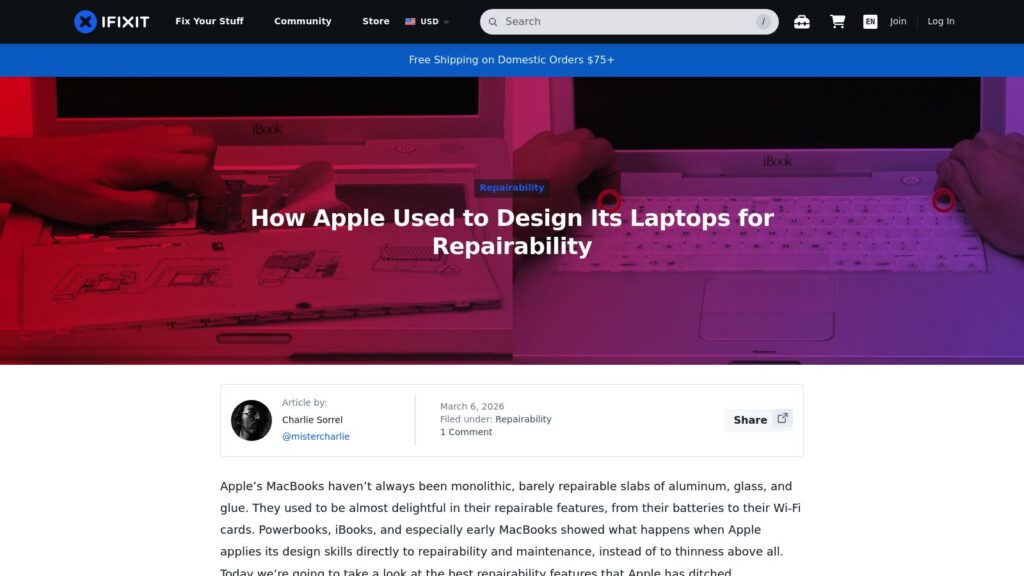
Macbook Neo Shows How Far Apple’s Repairability Design Has Fallen

iFixit offers guides, forums, teardowns, and a repair assistant for fixing items. It promotes community involvement and the Right to Repair movement, while providing a range of quality parts and tools in its store. The article discusses how Apple’s early laptops were designed for repairability, featuring easily replaceable keyboards, batteries, RAM, and storage, in contrast to current models that prioritize design over maintenance. The need for modular components is emphasized as essential for longevity and usability, especially in a rapidly evolving tech landscape.

https://www.ifixit.com/News/115995/how-apple-used-to-design-its-laptops-for-repairability

Macbook Neo Shows How Far Apple’s Repairability Design Has Fallen Read More »

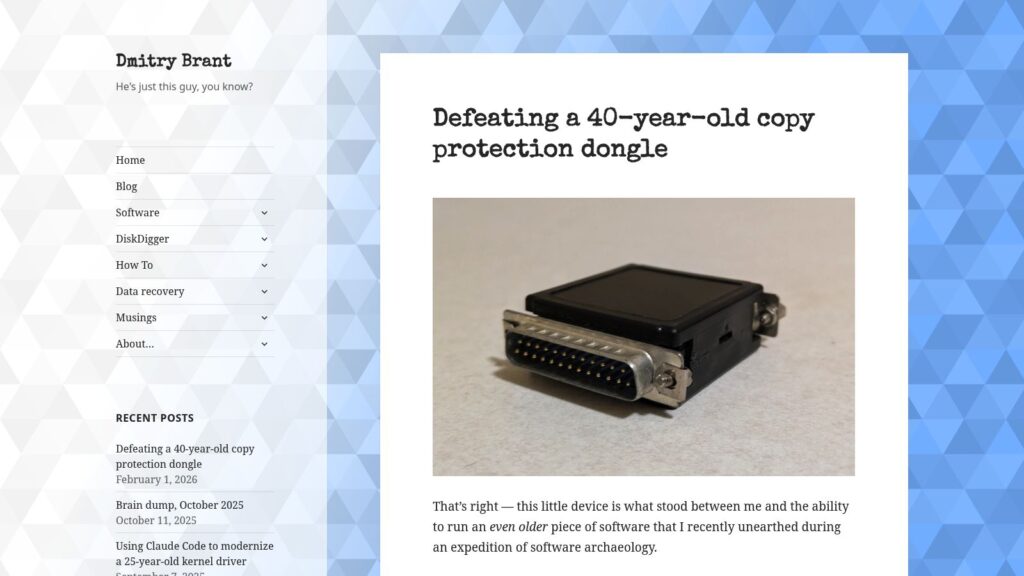
Defeating a 40-year-old Copy Protection Dongle

Dmitry Brant’s blog features recent challenges with outdated software protection, including defeating a 40-year-old hardware dongle for a legacy RPG-based accounting program still running on Windows 98. The blog details a software archaeology process to extract data and bypass the dongle’s simplistic copy protection, ultimately allowing access to the software’s source code and enabling historical preservation.

https://dmitrybrant.com/2026/02/01/defeating-a-40-year-old-copy-protection-dongle

Defeating a 40-year-old Copy Protection Dongle Read More »

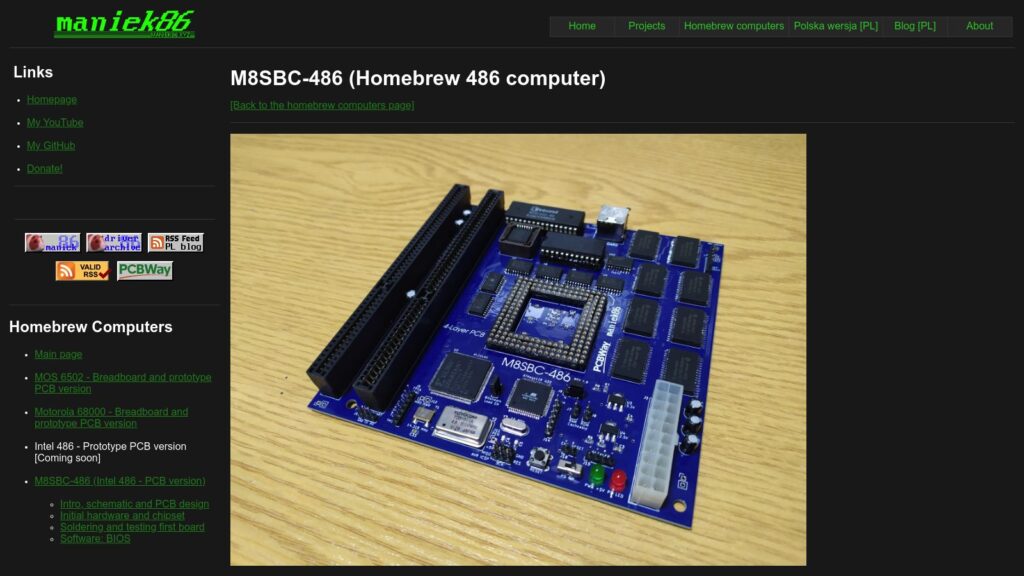
M8SBC-486 (Homebrew 486 Computer)

M8SBC-486 is a homemade 486 computer motherboard, built from scratch, aimed at running Linux and DOOM. It’s “kinda PC compatible” with some limitations (e.g., missing DMA impacts sound support). Features include a 4-layer PCB, 5V 486 CPU socket, and support for certain ISA cards and DOS operating systems. The project is experimental and a hobby, reflecting extensive research on older x86 chips. Supported by PCBWay, the project has various compatibility notes for hardware and software. More details can be found on multiple dedicated subpages.

https://maniek86.xyz/projects/m8sbc_486.php

M8SBC-486 (Homebrew 486 Computer) Read More »

Learning Retro Computer Electronics Fault Finding and Restoration

TLDR: Guide for retro computer repair: focus on safety, visual inspection, mechanical checks, cleaning, power checks, and diagnosing issues without extensive disassembly. Use minimal invasive methods and grow skills through experience while avoiding unnecessary damage. Join communities for support and resources.

https://retrogamecoders.com/learning-retrocomputer-electronics/

Learning Retro Computer Electronics Fault Finding and Restoration Read More »

Scroll to Top