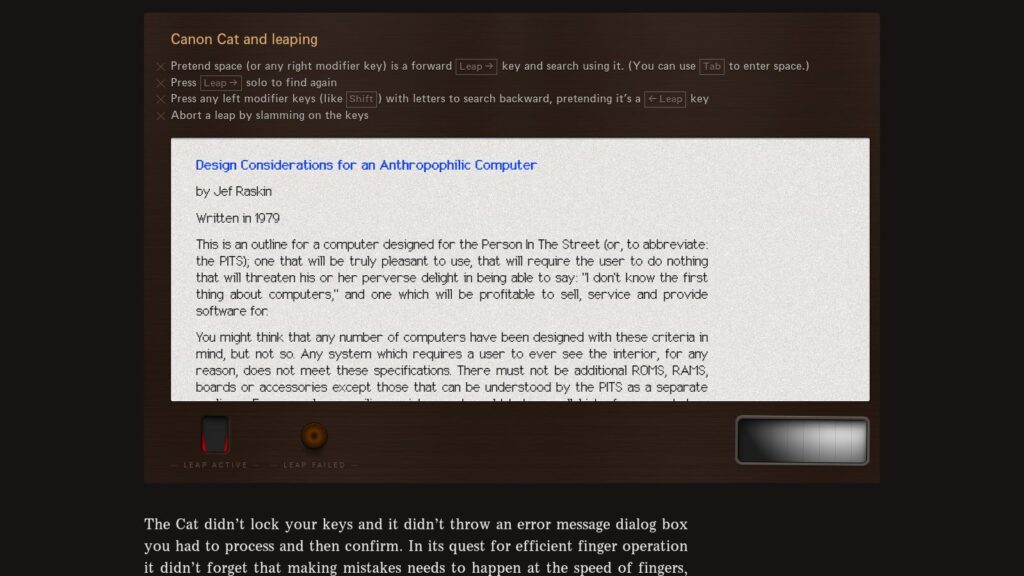
The article explores the historical evolution of keyboard design and interaction, emphasizing how human finger capabilities often outpace software responsiveness. It highlights the importance of designing interfaces that respect the speed and independence of finger movements by minimizing latency, optimizing feedback, and carefully managing buffering and loading states to create a seamless, “finger-time” experience. Integrating lessons from early typewriters, modern UI design must honor motor memory and overlapping finger actions to enhance productivity and user satisfaction.
Show Your Hands Honor for the Strange Power They Bring You