history

“We Didn’t Want To Simply Revisit The Past For Nostalgia’s Sake” – Gremlin Graphics Is Being Revived As a Heritage Label

Gremlin Graphics Classics, a new heritage label dedicated to preserving and revitalizing the games and legacy of the British developer Gremlin Graphics, is set to launch in October with involvement from founder Ian Stewart. The label, led by Allan Turvey of Midnight Brew, aims to celebrate Gremlin’s pioneering 8-bit era and support new projects, including a deluxe physical edition of the new Monty Mole game “Dreamtime Monty” for the Spectrum NEXT. Beyond mere nostalgia, the initiative seeks to honor the creative spirit behind Gremlin by collaborating with developers, archivists, and enthusiasts to inspire future generations while maintaining commercial sustainability.
https://www.timeextension.com/news/2026/07/we-didnt-want-to-simply-revisit-the-past-for-nostalgias-sake-gremlin-graphics-is-being-revived-as-a-heritage-label

“We Didn’t Want To Simply Revisit The Past For Nostalgia’s Sake” – Gremlin Graphics Is Being Revived As a Heritage Label Read More »

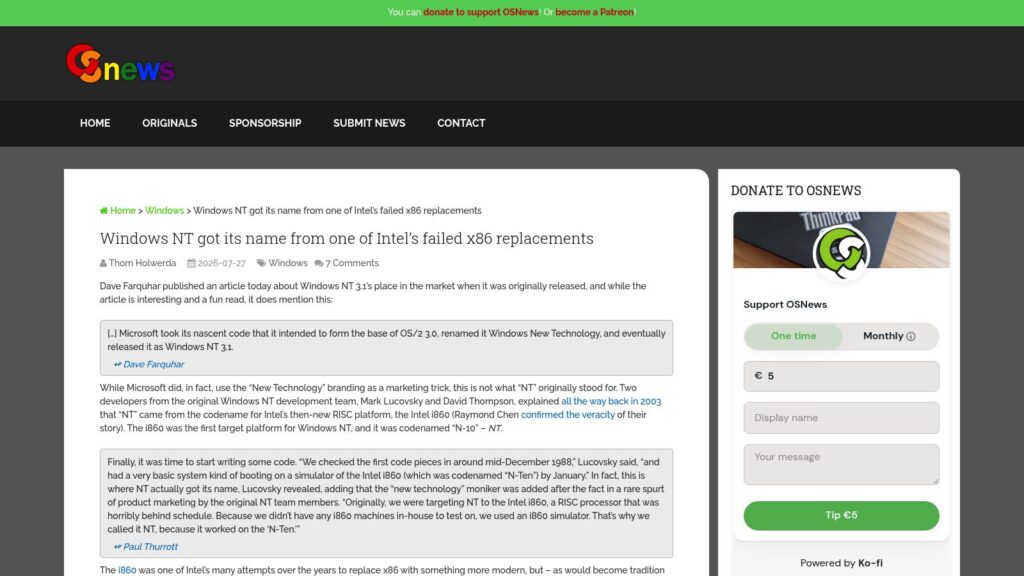
Windows NT Got Its Name From One of Intel’s Failed X86 Replacements

Windows NT originally got its name from Intel’s canceled RISC processor project, the i860, which was codenamed “N-Ten” (NT), the first target platform for the OS. Microsoft later retrofitted the “New Technology” marketing label to the NT name, but it was the Intel i860’s codename that truly inspired Windows NT’s designation.

https://www.osnews.com/story/145617/windows-nt-got-its-name-from-one-of-intels-failed-x86-replacements/

Windows NT Got Its Name From One of Intel’s Failed X86 Replacements Read More »

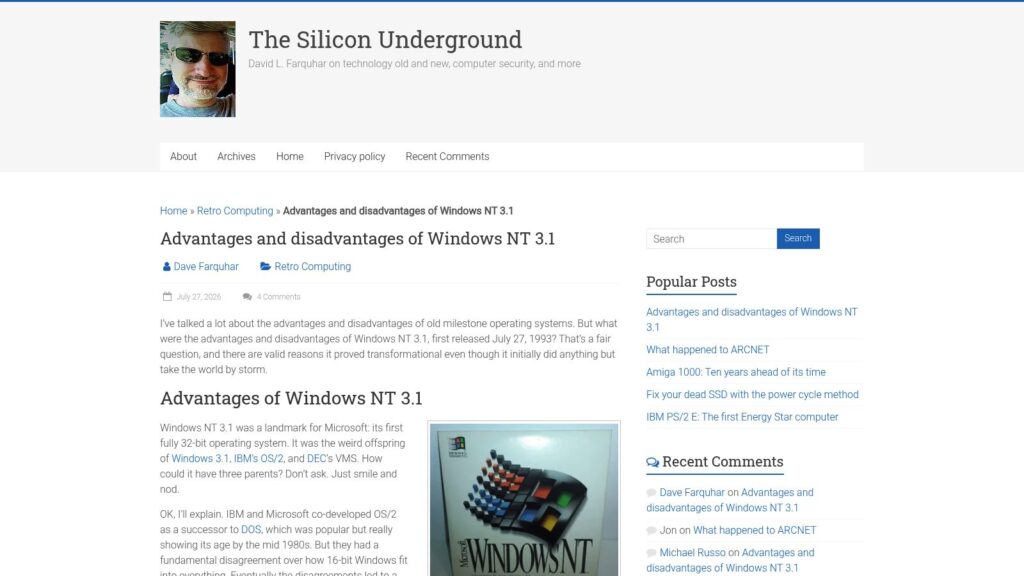
Advantages and Disadvantages of Windows NT 3.1

Windows NT 3.1, released in 1993, was Microsoft’s first fully 32-bit operating system featuring improved stability, security, pre-emptive multitasking, and a new NTFS file system. It was designed to be portable across various CPU architectures, but its high memory requirements, limited driver support, and difficult setup hindered widespread adoption initially. Despite these drawbacks, Windows NT 3.1 laid the foundation for all future Microsoft operating systems and influenced the decline of proprietary Unix systems.

https://dfarq.homeip.net/advantages-and-disadvantages-of-windows-nt-3-1/

Advantages and Disadvantages of Windows NT 3.1 Read More »

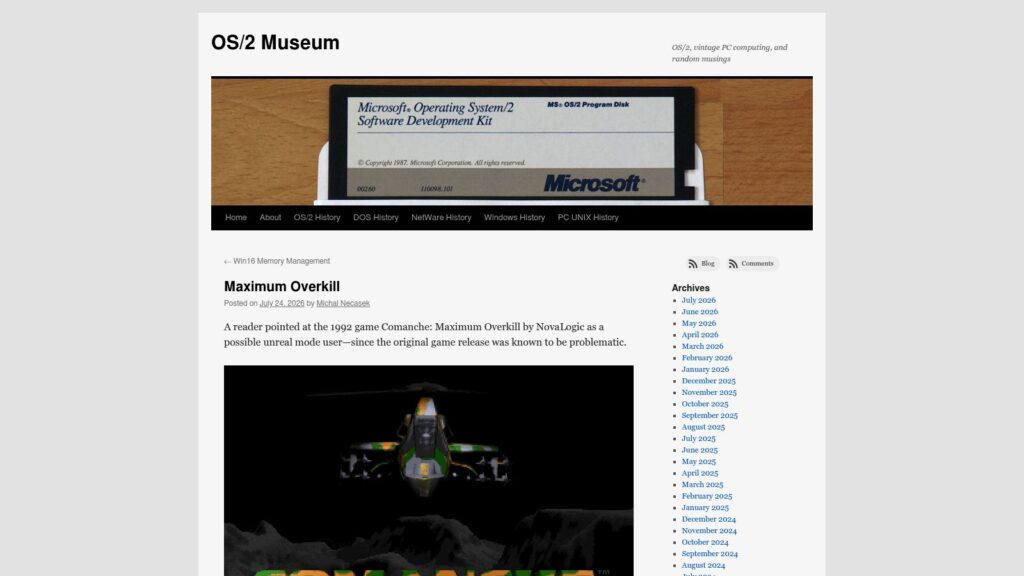
Maximum Overkill | OS/2 Museum

The 1992 game Comanche: Maximum Overkill by NovaLogic uses a nonstandard DOS extender and an unconventional method to enter protected mode, which works on 386 and 486 processors but can fail on Pentium and later CPUs due to changes in how the Intel Pentium handles the writability of the CS segment in real mode. This subtle CPU architectural difference, combined with variations in system BIOS behavior, causes the original game to crash on some Pentium systems, especially after the first run, though patched and updated versions improve compatibility.

https://www.os2museum.com/wp/maximum-overkill/

Maximum Overkill | OS/2 Museum Read More »

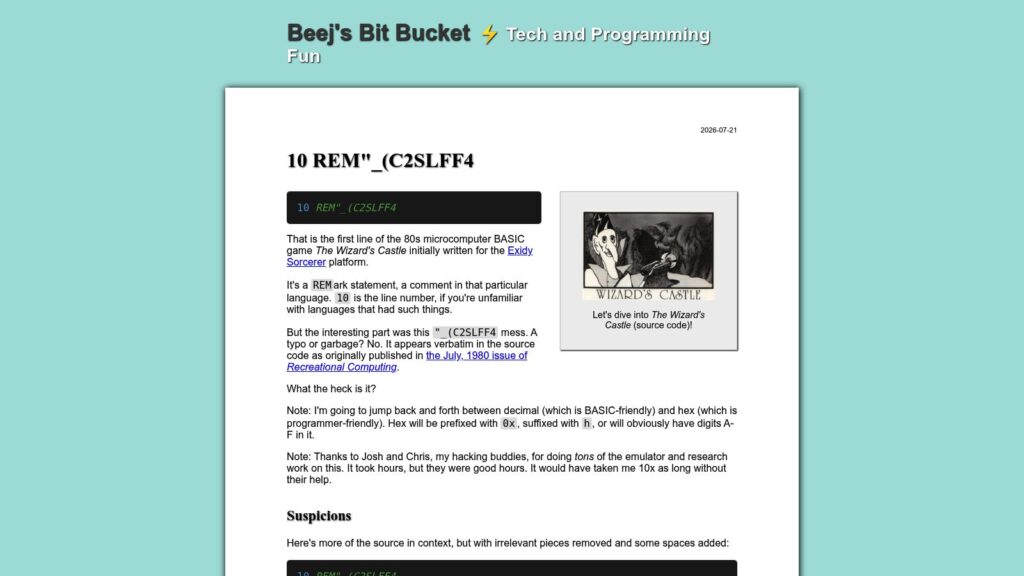
10 REM”_(C2SLFF4

The article investigates the mysterious first line of the 1980 Exidy Sorcerer BASIC game The Wizard’s Castle, which contains a REM statement embedding machine code for seeding the pseudo-random number generator (PRNG). By analyzing the Sorcerer’s memory and instruction set, the author and collaborators reveal that the REM text is actually tokenized machine code stored in BASIC’s linked-list program memory, executed via the USR() function to seed randomness using the Z80 processor’s R register. This illustrates a unique, low-level technique to embed executable code in comments on early microcomputers, highlighting the interplay between BASIC and machine code in vintage gaming and software.

https://beej.us/blog/data/mystery-comment/

10 REM”_(C2SLFF4 Read More »

The Computer That Helped Win World War II

During World War II, the British developed Colossus, the world’s first large-scale programmable electronic digital computer, to decrypt complex German encrypted communications from the Lorenz cipher machine known as Tunny. Designed by engineer Tommy Flowers, Colossus automated and accelerated cryptanalysis at Bletchley Park, enabling the Allies to intercept critical military intelligence that significantly aided their war efforts. The machine’s success marked a pioneering use of digital electronics in computing and is recognized as an IEEE Milestone for its historical and technological significance.

https://spectrum.ieee.org/colossus-computer-ieee-milestone

The Computer That Helped Win World War II Read More »

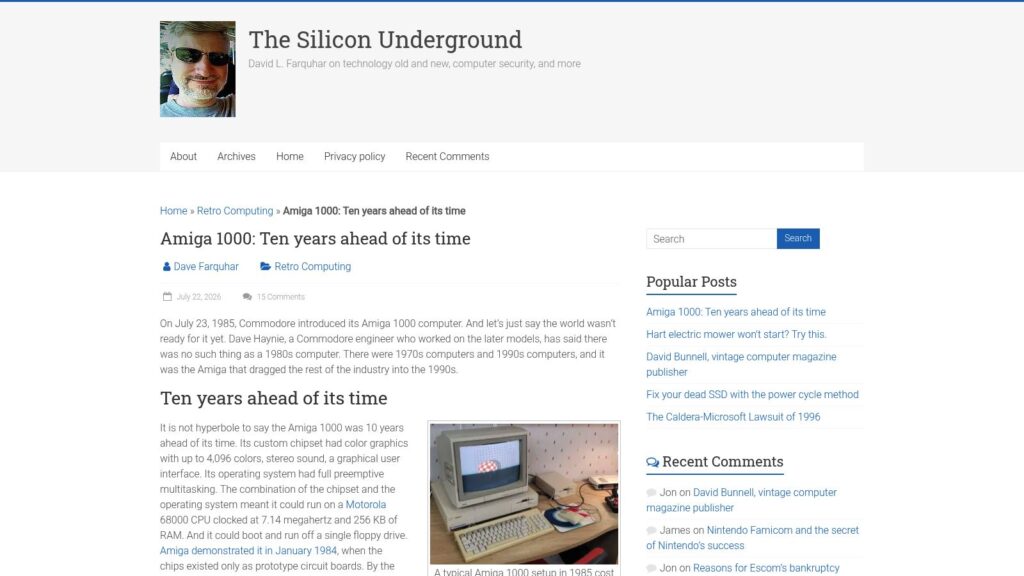
Amiga 1000: Ten Years Ahead of Its Time – The Silicon Underground

The Amiga 1000, introduced by Commodore in 1985, was a groundbreaking computer that featured advanced capabilities like up to 4,096 colors, stereo sound, a graphical user interface, and full preemptive multitasking on a Motorola 68000 CPU, placing it a decade ahead of its time. Despite its innovative hardware and operating system, the Amiga struggled commercially due to poor marketing, management issues at Commodore, and a high price point, ultimately leading to the company’s bankruptcy less than nine years later. Many enthusiasts who used the Amiga recall it as a uniquely powerful and forward-looking machine that outpaced contemporaneous PCs until the mid-1990s.

https://dfarq.homeip.net/amiga-1000-ten-years-ahead-of-its-time/

Amiga 1000: Ten Years Ahead of Its Time – The Silicon Underground Read More »

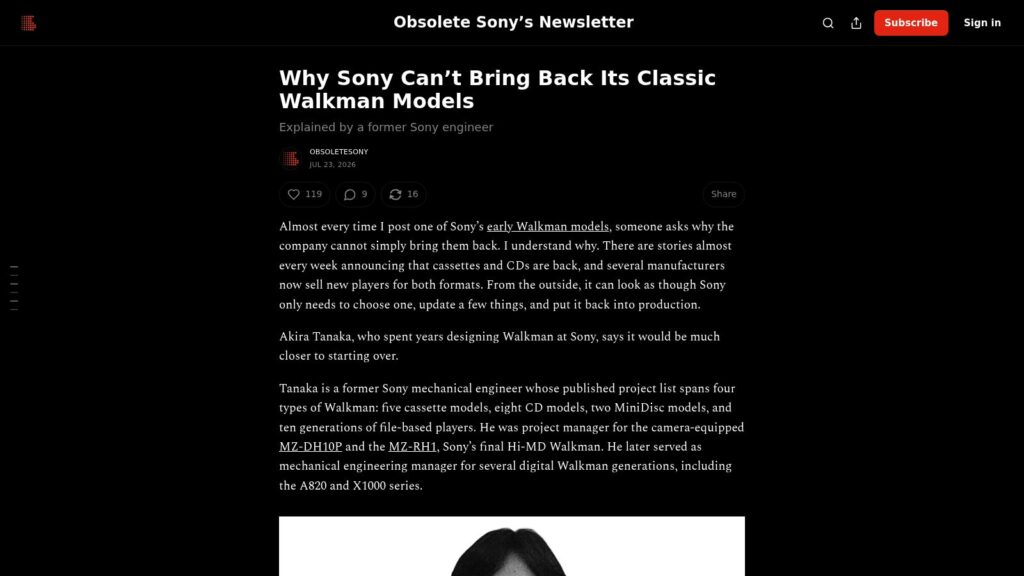
Why Sony Can’t Bring Back Its Classic Walkman Models

Sony cannot bring back its classic Walkman models due to the scarcity of original parts and the outdated technology that no longer meets current manufacturing standards. Additionally, producing these devices now would be cost-prohibitive and incompatible with modern consumer expectations, making a faithful revival impractical.

https://obsoletesony.substack.com/p/why-sony-cant-bring-back-classic-walkman

Why Sony Can’t Bring Back Its Classic Walkman Models Read More »

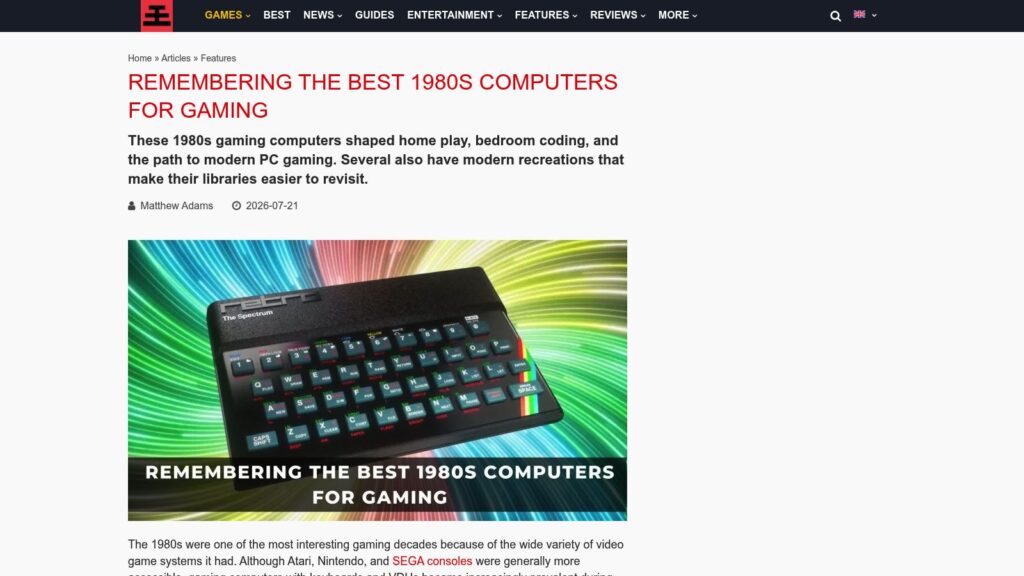
Remembering the Best 1980s Computers for Gaming

The article highlights key 1980s home computers that significantly influenced gaming and coding culture, including the Sinclair ZX Spectrum, Commodore 64, Amstrad CPC 464, Atari ST, Commodore Amiga 500, and IBM PC/MS-DOS clones. These systems offered innovative graphics, sound, and expandability that shaped early PC gaming, and modern recreations like the Speccy, Commodore 64 Ultimate, and A500 Mini enable contemporary players to experience their classic game libraries. The piece emphasizes how these open, experimental platforms provided alternative gaming experiences alongside popular consoles of the era.

https://www.keengamer.com/articles/features/remembering-the-best-1980s-computers-for-gaming/

Remembering the Best 1980s Computers for Gaming Read More »

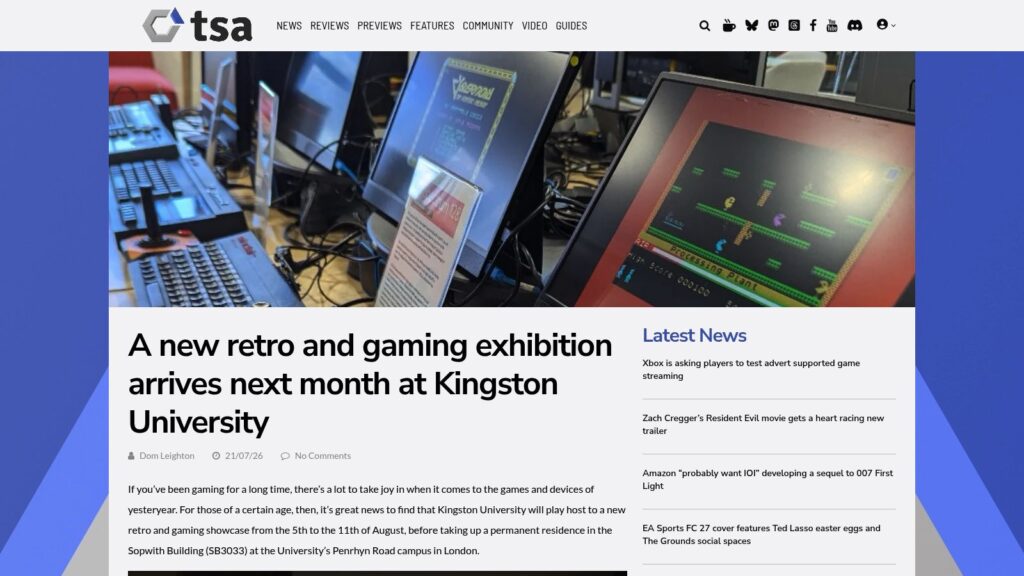
A New Retro and Gaming Exhibition Arrives Next Month at Kingston University

Kingston University will host a free retro and gaming exhibition from August 5th to 11th, showcasing over 60 playable machines from the 1970s to today, including iconic consoles like the ZX Spectrum, Commodore 64, Sega Megadrive, and Atari 2600. Organized by the Archive of Retro Computing, the event celebrates gaming history and the impact of early home computers and consoles in making computing accessible to the public. Following the exhibition, a permanent Archive of Retro Computing will be established at the university’s Penrhyn Road campus in London.

https://www.thesixthaxis.com/2026/07/21/a-new-retro-and-gaming-exhibition-arrives-next-month-at-kingston-university/

A New Retro and Gaming Exhibition Arrives Next Month at Kingston University Read More »

Scroll to Top