admin

Steve Jobs Talks iBook, AirPort, and More in Newly Surfaced 1999 Video

A newly surfaced 1999 internal video captures Steve Jobs discussing Apple’s product strategy shortly after the launch of the iBook G3 at Macworld New York, highlighting the completion of Apple’s four-quadrant product lineup and the introduction of AirPort wireless networking developed with Lucent. Jobs emphasized Apple’s advantage in integrating hardware and software to bring innovations like wireless networking and FireWire to market efficiently and stated that the company’s focus was on making great products rather than just financial recovery, aiming to make Apple great again by prioritizing creative professionals, education, and consumers over enterprise markets.

https://www.macrumors.com/2026/03/23/steve-jobs-talks-ibook-airport-and-more/

Steve Jobs Talks iBook, AirPort, and More in Newly Surfaced 1999 Video Read More »
LotusNotes

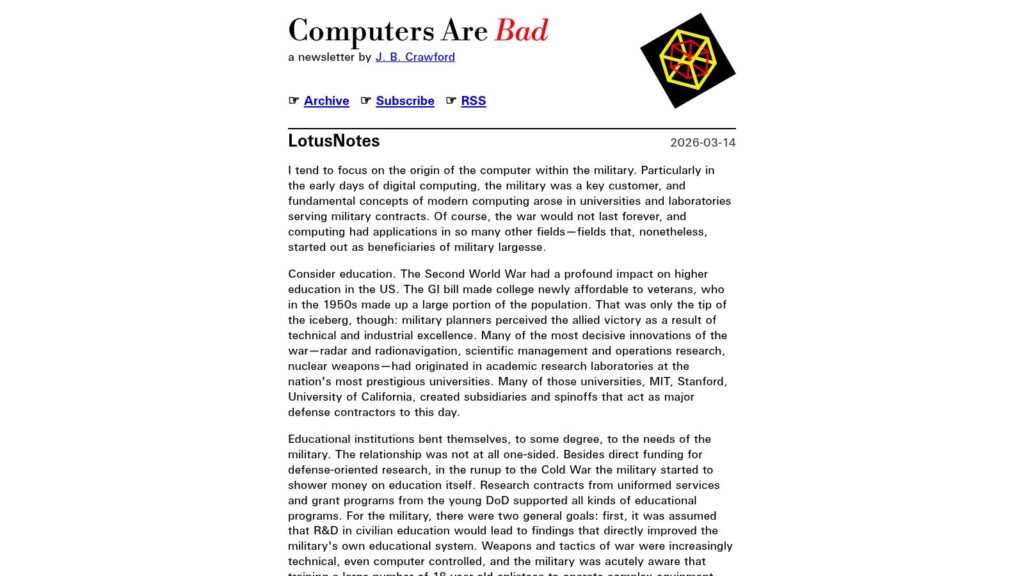
Lotus Notes originated from the University of Illinois’ PLATO system, a pioneering multi-user, networked computer system emphasizing public collaboration and user-generated content, funded by the military and the NSF. Developed in the 1980s by Ray Ozzie and Iris Associates under Lotus Development, Lotus Notes evolved as a flexible groupware platform blending email, calendaring, and database functions with replication technology inherited from PLATO’s architecture. Despite its initial dominance in enterprise groupware, Lotus Notes declined significantly after IBM’s acquisition, largely due to competition from Microsoft Exchange and shifting industry standards favoring open protocols and web integration.

https://computer.rip/2026-03-14-lotusnotes.html

LotusNotes Read More »

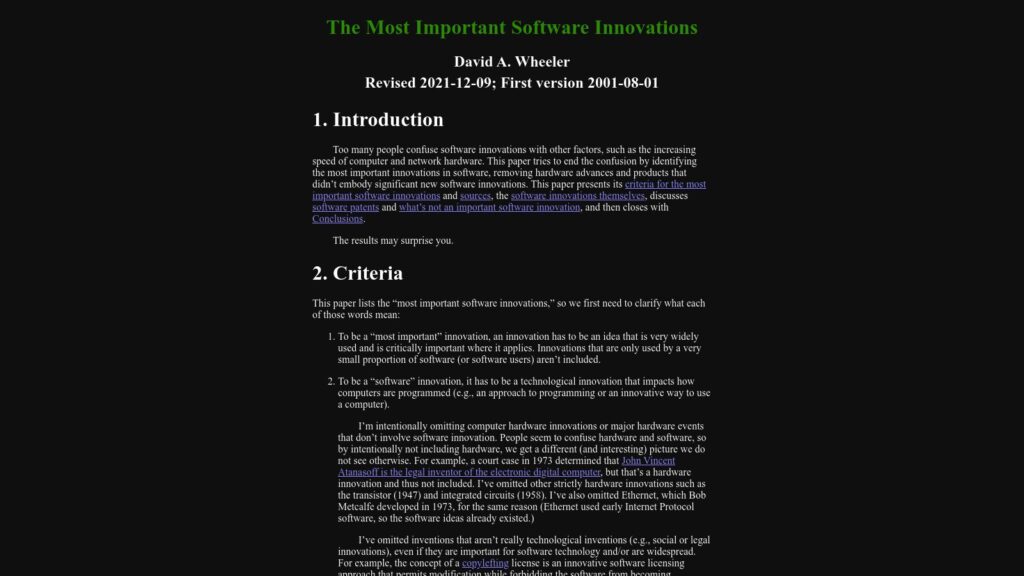
The Most Important Software Innovations

David A. Wheeler’s paper identifies the most important software innovations by focusing strictly on technological innovations that have had widespread and critical impact on programming, deliberately excluding hardware advances and non-technological developments such as legal or social inventions. The paper also argues that software patents have largely failed to promote innovation, often covering obvious ideas or prior art, and have instead impeded software development, with most key software innovations never patented; this challenges the effectiveness of patents as incentives in the software industry.

https://dwheeler.com/innovation/innovation.html

The Most Important Software Innovations Read More »

ENIAC, the General-Purpose Digital Computer, Is 80

ENIAC, unveiled on February 15, 1946, was the first large-scale, general-purpose, programmable electronic digital computer, developed at the University of Pennsylvania’s Moore School of Electrical Engineering. It marked a major breakthrough in computing, making high-speed calculations practical and laying the foundation for modern computers and the digital economy, while also highlighting pioneering contributions from women programmers and influencing the evolution of technology over the past 80 years.

https://spectrum.ieee.org/eniac-80-ieee-milestone

ENIAC, the General-Purpose Digital Computer, Is 80 Read More »

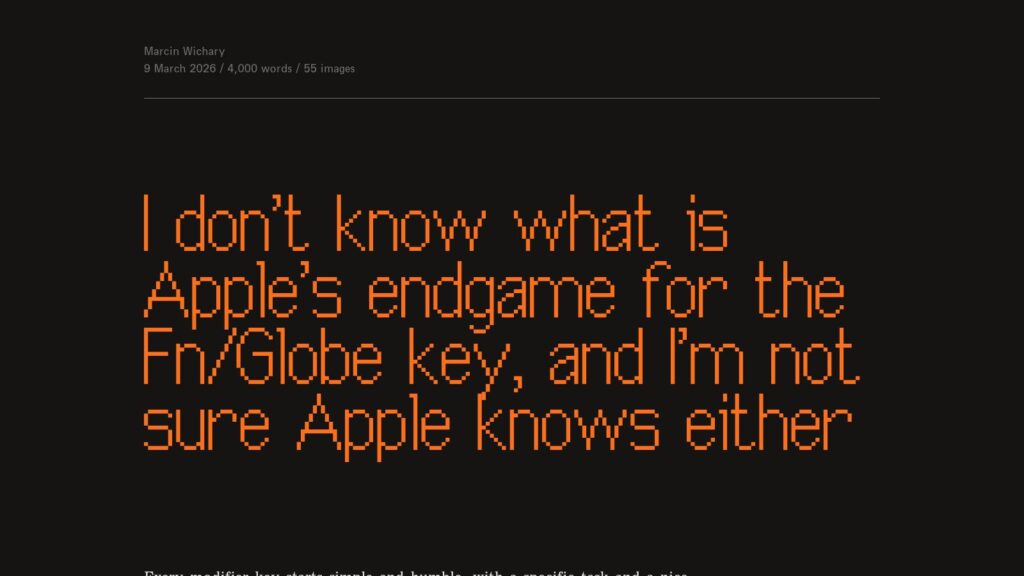
I Don’t Know What Is Apple’s Endgame for the Fn/Globe Key, and I’m Not Sure Apple Knows Either

Apple’s Fn/Globe key evolution reflects its struggle with modifier key functionality. Originally designed to simulate missing keys on compact keyboards, the Fn key expanded tasks but lacked standardization across devices. With the introduction of the Globe key on iPads and Macs, Apple introduced new shortcuts, but inconsistencies between devices and confusing user experiences emerged. The challenge lies in integrating a coherent system across third-party keyboards while managing existing shortcuts, ultimately complicating usage and confusing users. The article urges Apple to reconsider and simplify its approach to modifier keys for improved functionality and user experience.

https://aresluna.org/fn/

I Don’t Know What Is Apple’s Endgame for the Fn/Globe Key, and I’m Not Sure Apple Knows Either Read More »

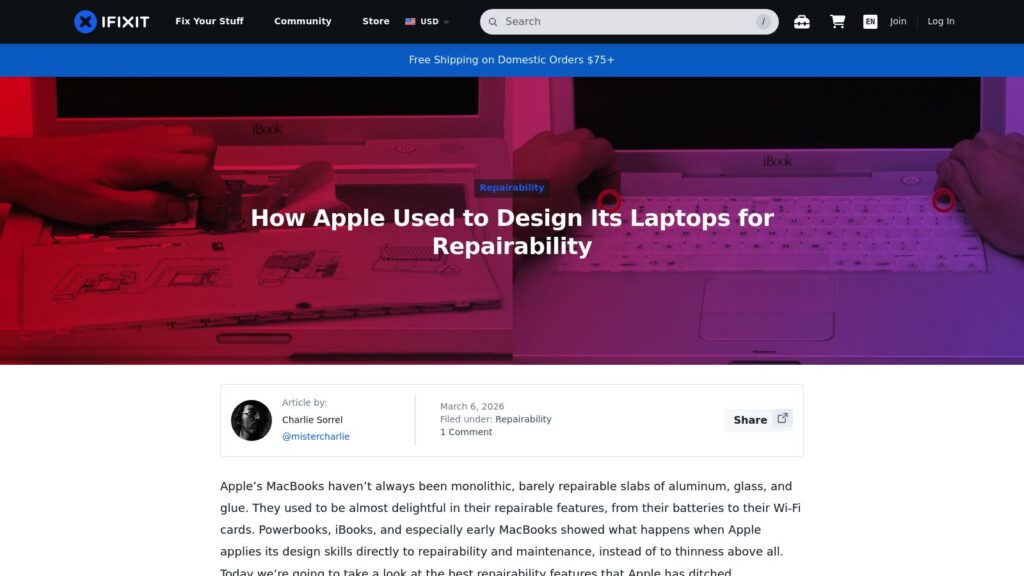
Macbook Neo Shows How Far Apple’s Repairability Design Has Fallen

iFixit offers guides, forums, teardowns, and a repair assistant for fixing items. It promotes community involvement and the Right to Repair movement, while providing a range of quality parts and tools in its store. The article discusses how Apple’s early laptops were designed for repairability, featuring easily replaceable keyboards, batteries, RAM, and storage, in contrast to current models that prioritize design over maintenance. The need for modular components is emphasized as essential for longevity and usability, especially in a rapidly evolving tech landscape.

https://www.ifixit.com/News/115995/how-apple-used-to-design-its-laptops-for-repairability

Macbook Neo Shows How Far Apple’s Repairability Design Has Fallen Read More »

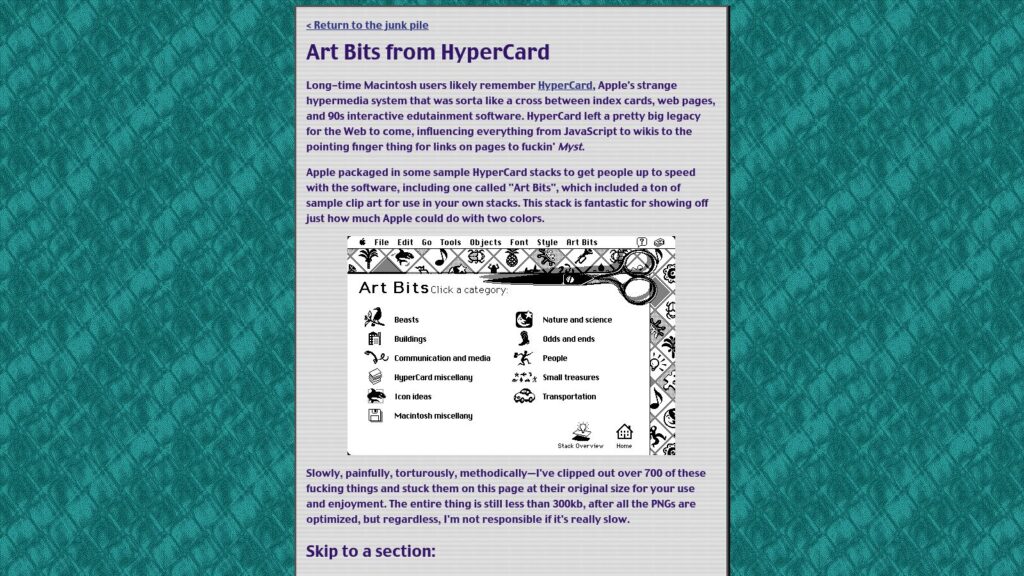
Art Bits From HyperCard

HyperCard, Apple’s early hypermedia system, influenced web development significantly. It included sample stacks like “Art Bits,” showcasing two-color clip art. Over 700 images from this collection have been optimized and shared online for users’ enjoyment, maintaining a small size. Categories include beasts, buildings, media, and more, each containing various clip art examples.

https://archives.somnolescent.net/web/mari_v2/junk/hypercard/

Art Bits From HyperCard Read More »

The Windows® 95 User Interface: a Case Study in Usability Engineering

Windows 95’s user interface development involved an interdisciplinary team focusing on iterative design and usability testing. Aimed at enhancing user experience for both beginners and advanced users, the team applied usability engineering principles to address design challenges. The process consisted of exploration, rapid prototyping, and fine-tuning, which allowed for flexibility and continuous improvement based on user feedback. Key findings led to significant design changes, ensuring the interface was intuitive and efficient. The project relied heavily on problem tracking to resolve usability issues, achieving a high fix rate due to team dedication. Ultimately, the iterative approach was crucial for creating a user-friendly operating system that met diverse user needs.

https://dl.acm.org/doi/fullHtml/10.1145/238386.238611

The Windows® 95 User Interface: a Case Study in Usability Engineering Read More »

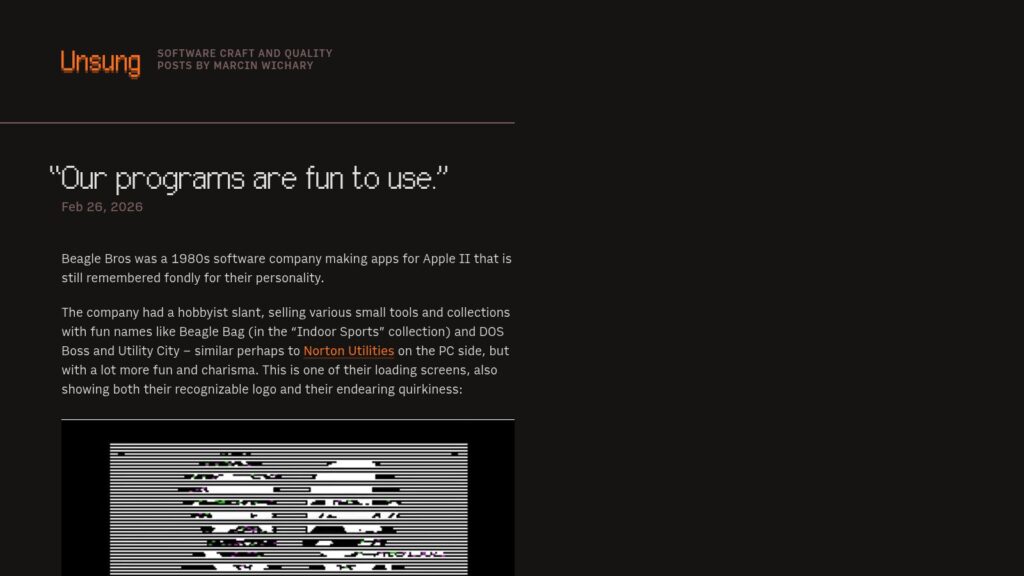
“Our Programs Are Fun to Use.”

Beagle Bros, a nostalgic 1980s software company for Apple II, was known for its quirky and fun applications. Their products combined practical tools with whimsical design, fostering a playful programming environment. Despite their eventual decline due to competition, their legacy inspires a community that values creativity in software development, illustrated by the ongoing interest in their catalog.

https://unsung.aresluna.org/our-programs-are-fun-to-use/

“Our Programs Are Fun to Use.” Read More »

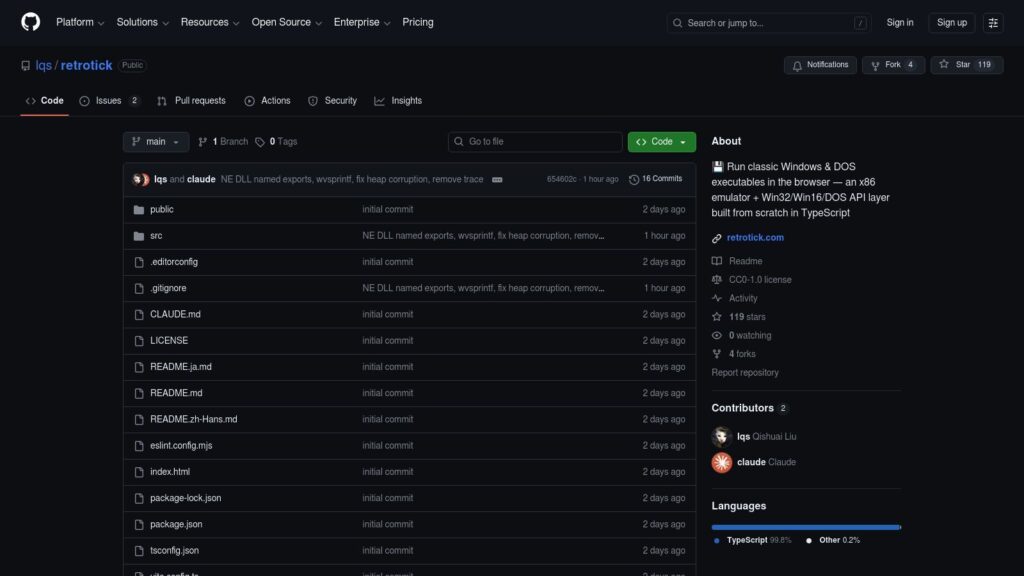
Lqs/retrotick: 💾 Run Classic Windows & DOS Executables in the Browser — an X86 Emulator + Win32/Win16/DOS API Layer Built From Scratch in TypeScript

RetroTick: Run classic Windows/DOS executables in the browser via an x86 emulator and Win32/DOS API layer built in TypeScript. Offers a simple drag-and-drop interface. Includes support for various binaries and basic applications. Ongoing development aims to enhance compatibility and rendering fidelity. Released under CC0 1.0.

https://github.com/lqs/retrotick

Lqs/retrotick: 💾 Run Classic Windows & DOS Executables in the Browser — an X86 Emulator + Win32/Win16/DOS API Layer Built From Scratch in TypeScript Read More »

Scroll to Top