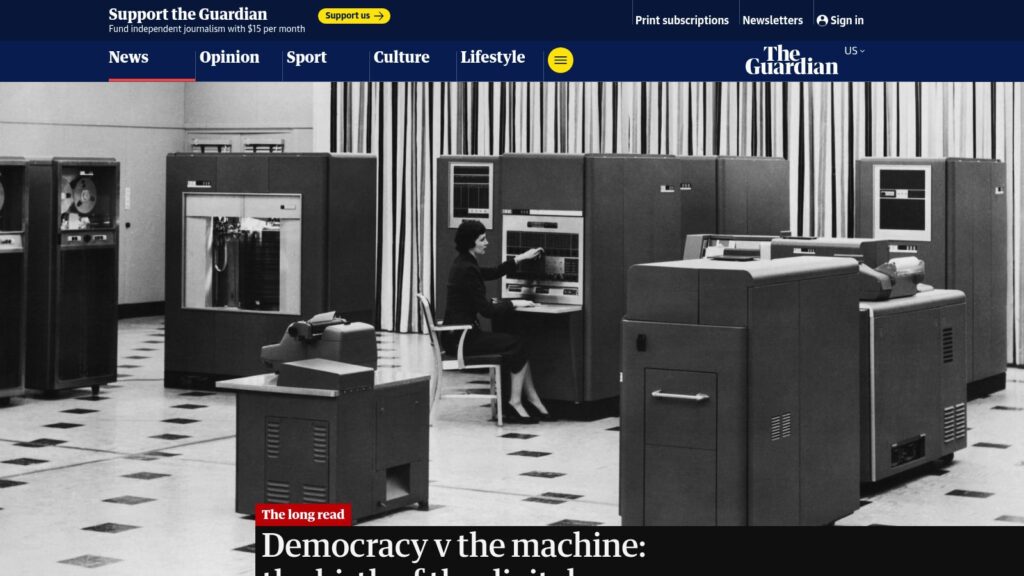
From the 1950s onward, pioneers in computing foresaw both the potential for technology to enable democratic participation and the risk of it creating an “automated state” driven by machines that could replace human judgment in governance. Early political data simulations, like those by Simulmatics Corporation, hinted at how computers might influence elections and public opinion, raising ethical concerns that largely went unheeded. As computing power grew and networks like the internet emerged, warnings about data-driven manipulation, loss of shared cultural frameworks, and the rise of hyper-personalized information predicted challenges to liberal democracy that continue to unfold today.
Democracy v the Machine: The Birth of the Digital Age and the Warnings That Were Ignored