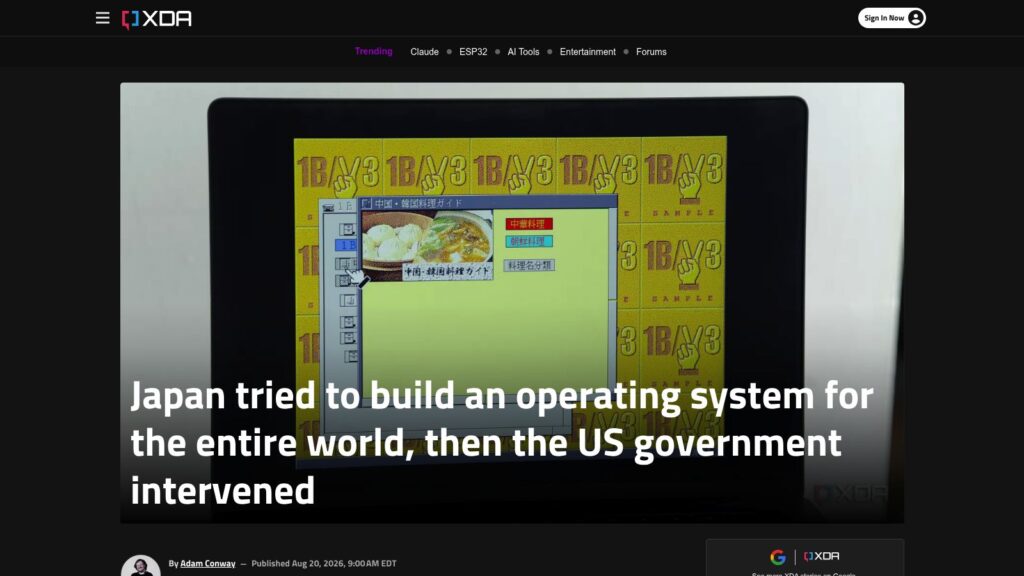
In 1984, the University of Tokyo launched the ambitious TRON project to create a vertically integrated, open operating system family for everything from embedded devices to desktop PCs, with the desktop variant BTRON featuring an advanced hypermedia document model and extensive multi-language character support. Despite government backing and industry adoption plans, the U.S. government cited TRON in a 1989 trade barrier report, which contributed to reputational damage and withdrawal of Japanese manufacturers from BTRON’s development, effectively ending its mainstream adoption; meanwhile, TRON’s embedded variant, ITRON, quietly became a dominant OS in billions of devices worldwide. Controversially, SoftBank founder Masayoshi Son is alleged to have lobbied against BTRON’s adoption, leveraging the U.S. report to hinder the project, though the embedded TRON systems continue to form critical infrastructure in modern electronics.
Japan Tried to Build an Operating System for the Entire World, Then the US Government Intervened