computer

Another Life Changed by the Mac

Shelly Brisbin recounts how discovering the Macintosh and its desktop publishing capabilities in the mid-1980s transformed her career path, enabling her to overcome challenges related to her low vision and a difficult job market. By learning to use a Mac Plus with PageMaker, she launched a freelance publishing business and eventually secured a professional editing and layout job, with the skills gained continuing to benefit her throughout her career.

https://sixcolors.com/post/2026/04/another-life-changed-by-the-mac/

Another Life Changed by the Mac Read More »

This Machine Changed My Life

In 1988, Antony Johnston’s introduction to the Macintosh Plus at his high school profoundly impacted his life by exposing him to a visual computer interface that made intuitive sense, unlike command-line systems. This experience led him to develop graphic design skills, ultimately shaping his career path into design and later professional writing, illustrating the transformative influence of early Mac computers.

https://sixcolors.com/post/2026/03/this-machine-changed-my-life/

This Machine Changed My Life Read More »

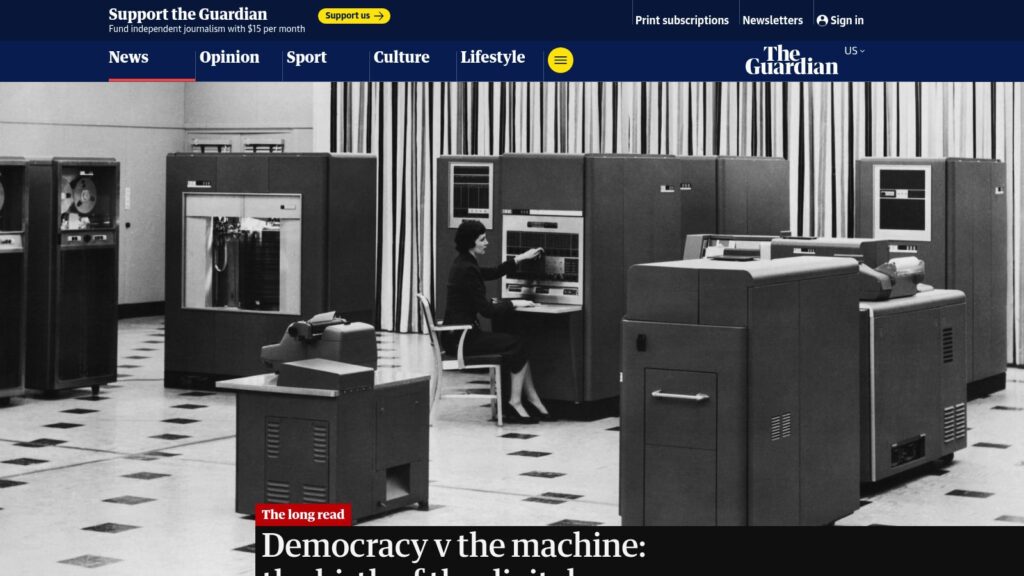
ENIAC, the General-Purpose Digital Computer, Is 80

ENIAC, unveiled on February 15, 1946, was the first large-scale, general-purpose, programmable electronic digital computer, developed at the University of Pennsylvania’s Moore School of Electrical Engineering. It marked a major breakthrough in computing, making high-speed calculations practical and laying the foundation for modern computers and the digital economy, while also highlighting pioneering contributions from women programmers and influencing the evolution of technology over the past 80 years.

https://spectrum.ieee.org/eniac-80-ieee-milestone

ENIAC, the General-Purpose Digital Computer, Is 80 Read More »

Thin Is In

The piece discusses the historical context of “thick” vs. “thin” clients in computing, highlighting a shift towards thin clients re-emerging through AI interactions. In the past, thick clients (like PCs) dominated, but with AI, the focus on networks for processing has made complex local UIs less relevant, as chat-based interfaces allow for easy interaction regardless of device capability. Future AI advancements suggest an increased reliance on cloud computing due to better model performance and lower costs for shared resources. However, rising memory shortages could impact technology availability and prices, as demand surges from AI developments. Overall, the trend leans towards minimal local compute reliance due to enhanced cloud capabilities.

https://stratechery.com/2026/thin-is-in/

Thin Is In Read More »

Byte Magazine Artist Robert Tinney, Who Illustrated the Birth of PCs, Dies at 78

Robert Tinney, the artist behind Byte magazine’s iconic covers from 1975 to the late 1980s, passed away at 78. His surrealist-influenced illustrations, created using airbrushed Designers Gouache, helped define the visual language of personal computing for a generation. Tinney’s work, characterized by its non-technical metaphors, made complex computing topics accessible and memorable.

https://arstechnica.com/gadgets/2026/02/byte-magazine-artist-robert-tinney-who-illustrated-the-birth-of-pcs-dies-at-78/

Byte Magazine Artist Robert Tinney, Who Illustrated the Birth of PCs, Dies at 78 Read More »

M8SBC-486 (Homebrew 486 Computer)

M8SBC-486 is a homemade 486 computer motherboard, built from scratch, aimed at running Linux and DOOM. It’s “kinda PC compatible” with some limitations (e.g., missing DMA impacts sound support). Features include a 4-layer PCB, 5V 486 CPU socket, and support for certain ISA cards and DOS operating systems. The project is experimental and a hobby, reflecting extensive research on older x86 chips. Supported by PCBWay, the project has various compatibility notes for hardware and software. More details can be found on multiple dedicated subpages.

https://maniek86.xyz/projects/m8sbc_486.php

M8SBC-486 (Homebrew 486 Computer) Read More »

Learning Retro Computer Electronics Fault Finding and Restoration

TLDR: Guide for retro computer repair: focus on safety, visual inspection, mechanical checks, cleaning, power checks, and diagnosing issues without extensive disassembly. Use minimal invasive methods and grow skills through experience while avoiding unnecessary damage. Join communities for support and resources.

https://retrogamecoders.com/learning-retrocomputer-electronics/

Learning Retro Computer Electronics Fault Finding and Restoration Read More »

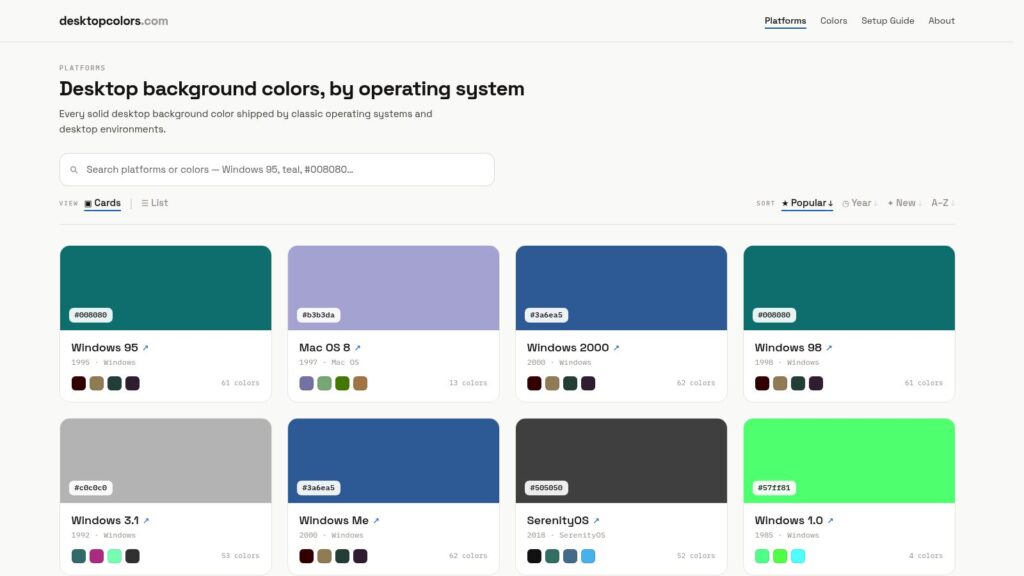
Windows 3.1 Included a Red and Yellow ‘Hot Dog Stand’ Color Scheme so Garish It Was Long Assumed to Be a Joke, so I Tracked Down Microsoft’s Original UI Designer to Get the True Story

Windows 3.1 featured a controversial “Hot Dog Stand” color scheme, perceived as a joke due to its bright red and yellow palette. However, designer Virginia Howlett clarified that it was not intended as a joke or challenge, but simply a bold design choice among various user interface themes created to appeal to diverse aesthetics. Howlett expressed surprise at the ongoing fascination with this theme decades later.

https://www.pcgamer.com/software/windows/windows-3-1-included-a-red-and-yellow-hot-dog-stand-color-scheme-so-garish-it-was-long-assumed-to-be-a-joke-so-i-tracked-down-the-original-designer-to-get-the-true-story/

Windows 3.1 Included a Red and Yellow ‘Hot Dog Stand’ Color Scheme so Garish It Was Long Assumed to Be a Joke, so I Tracked Down Microsoft’s Original UI Designer to Get the True Story Read More »

The RESISTORS Were Teenage Hackers and Computer Pioneers

TLDR: In the late 1960s, a group of teenage computer enthusiasts in New Jersey, called the RESISTORS, innovatively connected computers using acoustic couplers, showcasing early personal computing despite being largely overlooked. Mentored by Claude Kagan, they engaged in programming and technical exploration, contributing to their future careers in technology. Their story adds depth to the history of computing, highlighting hobbies beyond professional realms and collaboration in tech and arts, influencing visionaries like Ted Nelson.

https://spectrum.ieee.org/teenage-hackers

The RESISTORS Were Teenage Hackers and Computer Pioneers Read More »

Scroll to Top