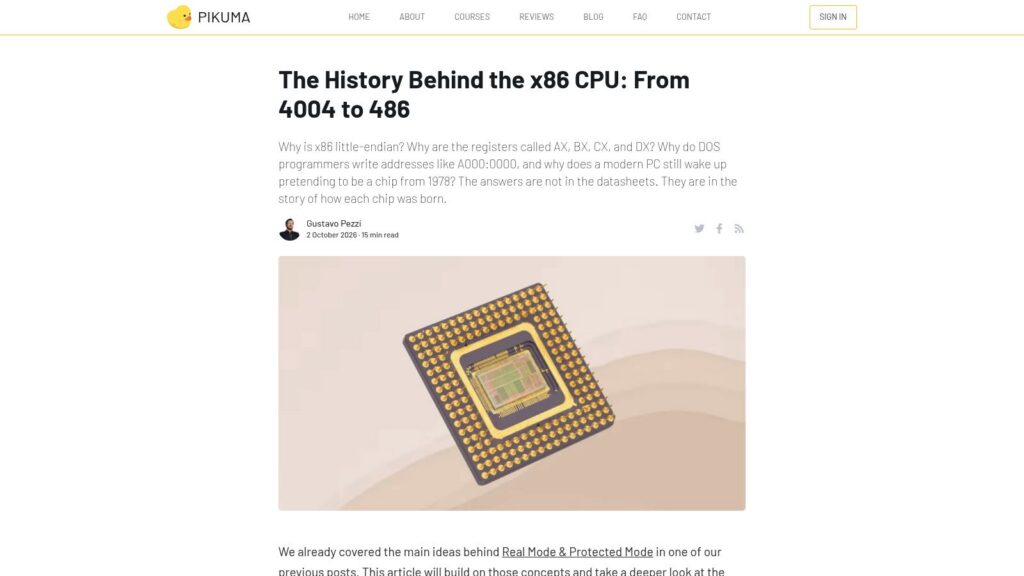
The x86 CPU architecture evolved over time from Intel’s original 4004 calculator chip through successive designs—8008, 8080, 8086, 80286, 80386, and 80486—each adding features while preserving backward compatibility, often due to market pressures and legacy constraints. Many quirks of x86, such as little-endian byte order, segmented memory addressing, and register naming conventions, stem from design decisions aimed at supporting older software and hardware, like the Datapoint 2200 terminal and the IBM PC, resulting in an architecture that accumulated features rather than being planned from scratch. This historical layering explains why modern x86 processors still start in real mode and retain legacy behaviors that have become integral to PC compatibility and software development.
The History Behind the X86 CPU: From 4004 to 486